
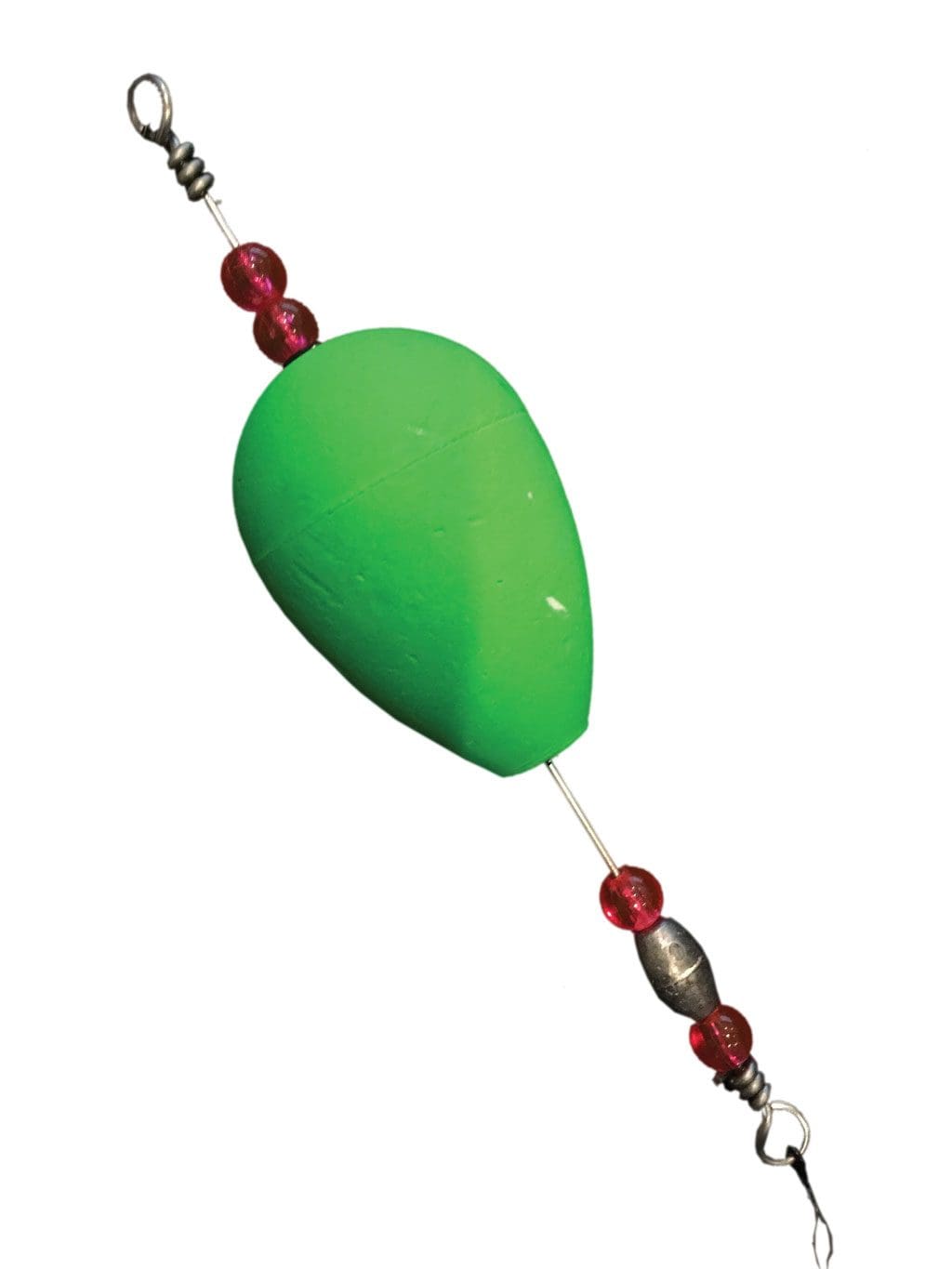
Popping corks are one of the most popular tools used by anglers for catching speckled trout. In fact, there are probably more trout caught under popping corks than by any other method.
We’re going to examine two kinds of popping corks and strategies that will help you catch more trout.
Cigar-or Oval Popping Cork
Description: These corks are cigar-shaped, or oval and often come with a wire running through the center. Most Texas anglers use the oval shape but in Florida cigar shaped corks are popular. These produce a more aggressive popping sound than just a standard foam float and create more splash compared to traditional round, plastic bobbers.
How to Rig: Attach the line to the top of the cork, and below it, tie a leader line (18-36 inches) with a jighead or hook. Jigheads work better with Gulp! or soft plastics and hooks with live bait. With live bait sometimes you will need to use a small split shot to weight it odnw.
When to Use: Effective in choppier waters or windy conditions where a louder noise is needed to attract fish. This also works well over deeper grass flats or near oyster reefs. Mix up the rhythm of your pops to see what the trout respond to on a given day.
popping corks are effective tools for the boat and bank angler.For those landbound it allows them the ability to make long casts.
Weighted Popping Cork with Beads
Description: This popping cork comes with a weighted bottom and often has beads above and below the cork on the wire. The beads clack together, creating additional noise that mimics shrimp sounds in the water. This is the most popular style on the Texas Coast by far.
How to Rig: Similar to the other setups, attach the mainline to the top of the cork. Below the cork, attach a leader line (18-30 inches) with a hook or jighead.
When to Use: This works great in the shallow but is also good in deeper water since its weights help it stay vertical. Use a combination of quick pops and slow, deliberate pops to create a mix of sounds (popping and bead clacking). This varied sound pattern can attract curious trout. Allow the bait to pause between pops, giving trout time to investigate and strike. Some anglers will pop it every 3-5 seconds while others wait as long as 10 seconds.
Tips for Using Popping Corks for Speckled Trout
*Adjust Your Leader Length: Depending on water depth and trout behavior, you may need to adjust the leader length to ensure the bait is in the strike zone.
*Experiment with Bait: Live shrimp, mullet, or croaker can be effective, but artificial lures like soft plastics or Gulp! also work well. Match the hatch and use the bait that trout are feeding on in the area.
*Vary Retrieve: Some days, trout prefer a fast retrieve with rapid pops; other days, a slow, methodical approach works better. Experiment to find what works best.
*Stay Alert for Strikes: Watch the cork closely for any unusual movements or if it disappears underwater. Set the hook promptly but not too aggressively to avoid pulling the bait away from the fish. On a good day of fishing you will sometimes see the cork go under as soon as you throw it out. Also be cautious of seeing “swirls’ around your cork. Sometimes big trout will circle before attacking.