
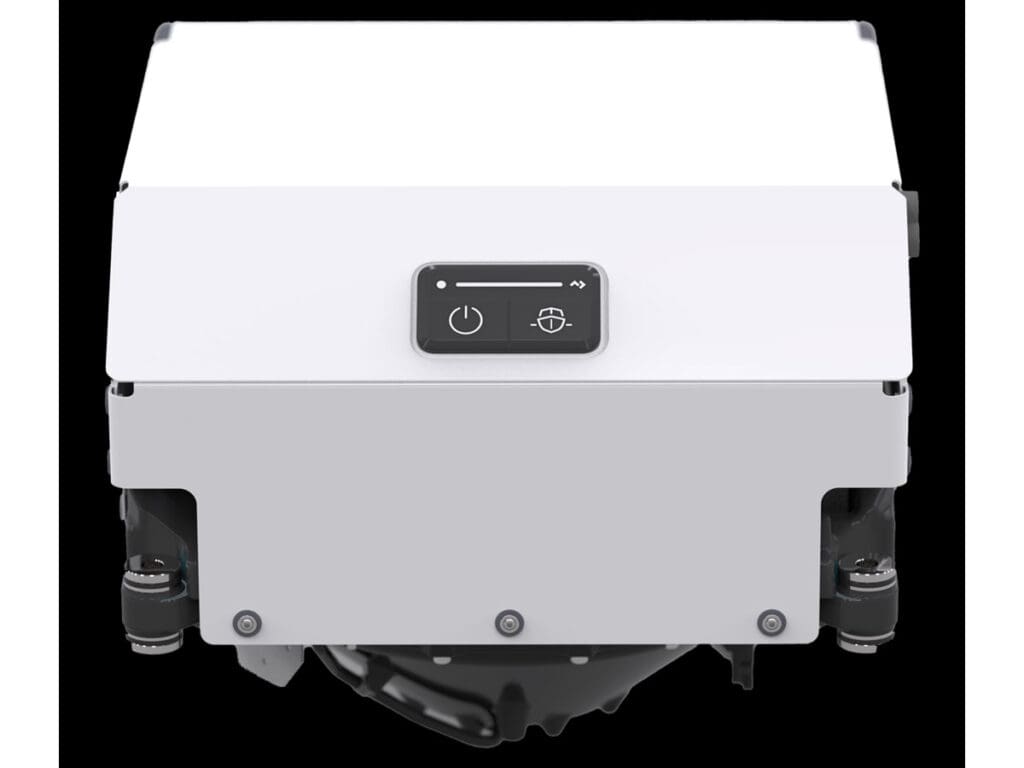
We first talked about gyroscopic boat stabilization systems all the way back in 2017. Back then, gyros were only for the well-to-do, to say the least. Seakeeper introduced systems that would reduce a boat’s rocking and rolling dramatically, often to the tune of 90-plus-percent, but only if you could spend $50,000 to $100,000 to add one to your 40-plus-foot boat. My, how times have changed.
As often happens with new tech, price has come down with time. And many new boats in the 30-plus category now offer Seakeeper gyros as optional equipment that can be installed at the factory. Today they even offer a version compact enough to fit in the leaning post of many boats all the way down to 23 feet. The Seakeeper1 is a flush-mount, self-contained unit that can be bolted onto just about any boat and runs on 12-volt power systems. The price for this mini-gyro? It’s not exactly cheap at $16,900 (MSRP), but it certainly is no longer the domain of the rich and famous, only.
Now for the 2025 model year there’s been another development which is a good indication that boat gyros will become even more commonplace: a very big player in the marine industry, Dometic, has come out with a version of their own. Up to now Seakeeper has had very minor league competition from relative unknowns, like Quick, but Dometic getting into the game is sure to shake things up (and also stop things from getting shaken up, as the case may be). The DG3 is designed for boats of 35 to 41 feet, with additional models for different sized boats expected soon. And it boasts several improvements over existing boat gyros. It can run on 12-, 24-, or 48-volt systems; controls get displayed on any MFD via Ethernet; sealed needle bearings replace bushings for enhanced longevity; and hydraulics are eliminated to reduce maintenance. Perhaps the biggest advantage the DG3 has over its competitors, however, is its spin-up time. Most systems take close to an hour from the time you flip the switch to the time it’s ready to stabilize the boat, but the DG3 requires just 16 minutes.
Price for this unit is on the steep side for most of us, at around $44,000 excluding installation. But it’s not the number that counts, it’s the trend. Boat gyros have been getting smaller and less expensive, and now the competition is growing. These things are here to stay – and sooner or later, we’ll have boat gyros for the masses.