
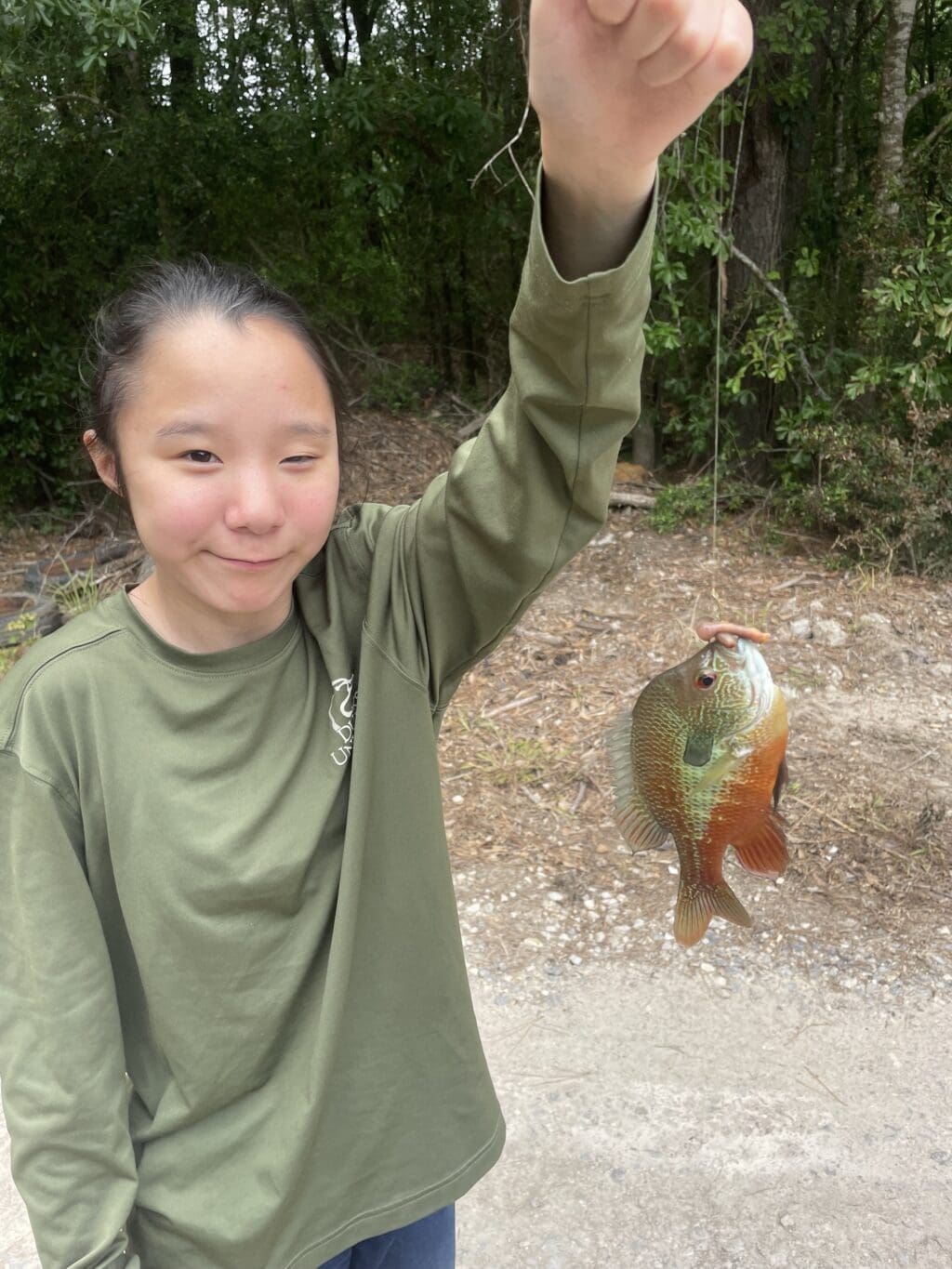
Sunfish are abundant in Texas lakes, rivers, and ponds. Species like bluegill, redear (shellcracker), longear, and green sunfish are popular targets for anglers of all skill levels. Here’s a step-by-step guide to help you catch them effectively:
1. Choose the Right Location
-
Look for warm, calm waters such as ponds, small lakes, creeks, and slow-moving rivers.
-
Focus on areas with structure: submerged logs, brush piles, aquatic vegetation, docks, and rocky shorelines.
-
In spring and early summer (March to June), target shallow areas (1–5 feet deep) where sunfish spawn.
-
During hotter months, look for slightly deeper water or shaded areas.
2. Pick the Best Time to Fish
-
Early morning (sunrise to mid-morning) and late afternoon (2 hours before sunset) are ideal.
-
Overcast days can extend the bite into midday.
-
Avoid the hottest part of the day, especially in peak Texas summer heat.
3. Select the Right Gear
-
Use ultralight spinning or spincast rods (4-6 ft) with light line (2-6 lb test).
-
Small hooks (size 6-10) work best for sunfish’s small mouths.
-
Use slip bobbers or fixed bobbers to control depth and detect bites easily.
-
Small split-shot weights help keep bait in the strike zone.
4. Choose Effective Baits
-
Live bait is highly effective: redworms, nightcrawlers, mealworms, and crickets.
-
Artificial baits can also work:
-
1/64 to 1/16 oz jigs with soft plastics (grubs, curly tails, tubes).
-
Tiny inline spinners or small crankbaits.
-
-
Match the bait size to the size of the sunfish (smaller is better).
5. Rigging and Presentation
-
Cast near structure and let the bait sit.
-
Keep the bait 1-3 feet below the surface, especially during spawning.
-
For artificial lures, use slow, steady retrieves with occasional twitches.
-
Watch the bobber closely for sudden movement or sinking.
6. Setting the Hook and Handling
-
Set the hook gently when you see or feel a bite.
-
Use needle-nose pliers or forceps to remove hooks carefully.
-
Handle sunfish behind the head to avoid their sharp dorsal spines.
-
Practice catch-and-release or follow local regulations for keeping fish.