
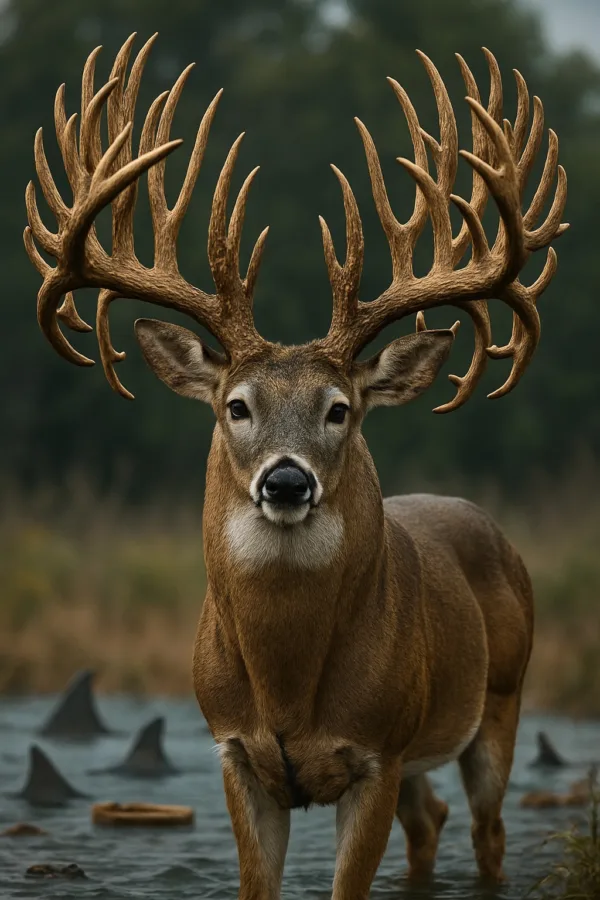
Across social media and hunting forums, AI-generated deer images have begun to appear: majestic whitetails with massive, perfectly symmetrical racks, velvet mule deer in alpine settings—even antler configurations that don’t naturally occur. Though stunning at first glance, these images are not of real animals—and their proliferation is stirring debate among hunters about authenticity and responsibility.
A growing number of hunters report seeing deer images online that simply don’t look right. Whitetails with nine-point symmetry, branches merging seamlessly into sky like unnatural architecture, or mule deer with horn curls that defy biology.
As an outdoors magazine editor and youth ministry founder, I find it concerning in several ways, including creating very unrealistic expectations of what a “trophy buck” happens to be.
While these may be digital art or AI-generated stock photos, the trend is worrying. DNREC, the Delaware natural resources agency, recently banned AI-genera
ted photos from its outdoor photography contests—highlighting a growing refusal by institutions to accept synthetic wildlife imagery .
-
Skewed Perception:
Think about new hunters seeing rack after rack of hyper-perfect bucks online. They may start believing that 200‑ or 250‑inch whitetails are common—setting unrealistic benchmarks and causing disillusionment when real-world experiences don’t match. -
Influencer and Marketing Risks:
With AI tools so accessible, there’s a danger that commercial content—from gear ads to guided hunt promotions—could be populated with unreal deer. If not clearly labeled, audiences may be misled about what is truly harvestable or typical in the woods. -
Blurred Lines Between Art and Reality:
Many artists use AI to create dreambucks or concept art, which is perfectly fine when shared as “art.” But when these images start appearing iThis practice isn’t going anywhere but we need to pay special attention because while at this point I for one can tell A.I. from real photos, it’s getting harder by the day. And soon there will be no way to tell the difference.
-
n wildlife-focused forums or in marketing without disclosure, they blur the crucial line between imagination and truth.