
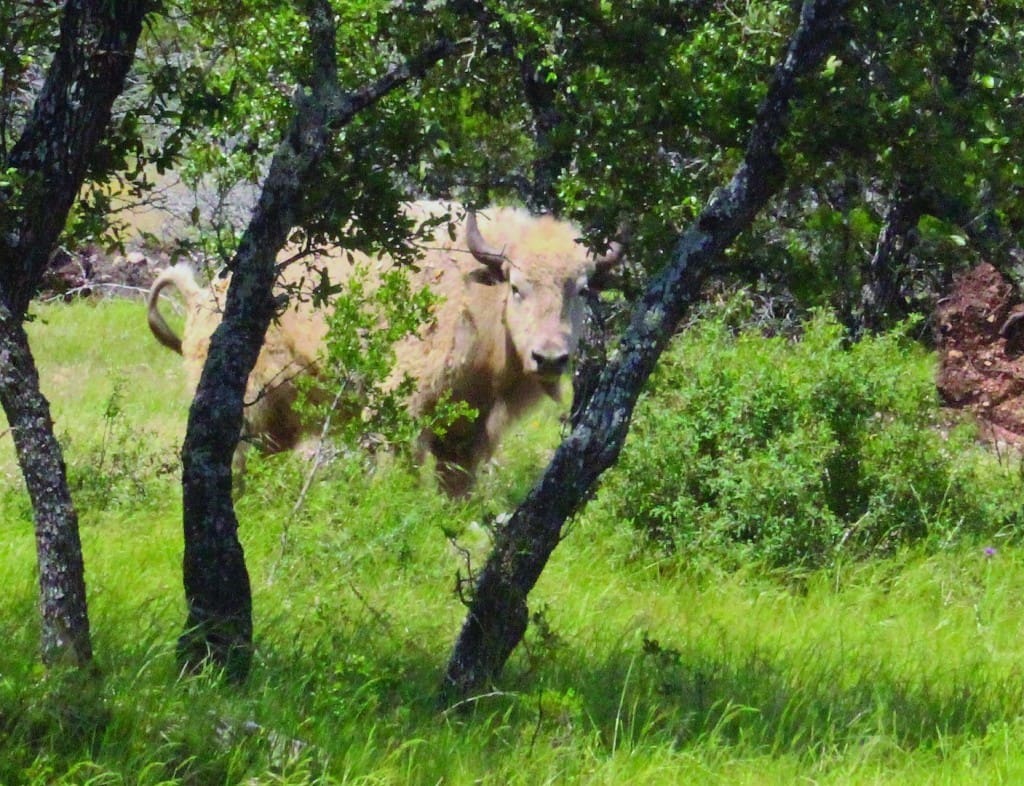
My fascination with the white bison (buffalo) goes all the way back to my childhood, when I first saw The White Buffalo starring Charles Bronson. The image of that massive, ghostly bison burned into my mind—a creature of power, mystery, and deeper meaning. Even then, I sensed it represented something more than just a rare animal.
Years later, I had a real-world encounter that changed everything. This time, it wasn’t a movie — it was part of my ministry and conservation work.
We were at the YO Ranch Headquarters in Texas, taking part in a Wild Wishes trip — a program my wife and I founded to grant wildlife encounters to children who have faced critical illness, loss of a parent, or other life challenges. On that trip, I was helping one of our Wild Wishes kids, Amos, take photographs of longhorn cattle as part of his personal wish experience.
Then it happened.
As we were observing the longhorns, movement caught my eye. A dark bison bull emerged from the trees. But behind him stood something much rarer — a massive white buffalo. It walked out from the oak mott, stood there boldly, and locked eyes with us. For a few seconds, there was total silence. Everyone, kids and adults, froze as we experienced something few people ever see. The white bison eventually turned and disappeared back into the trees but it left a lifelong impression on every one of us.
That real-life encounter set me on a path of deeper study and appreciation for the white buffalo. These animals are rare for several reasons. True white bison can be:
-
Albino — with pink eyes and completely white hair.
-
Leucistic — white hair but normal-colored eyes.
-
Genetic variants — some born white through natural genetic expression, sometimes darkening with age.
-
Beefalo hybrids — carrying domestic cattle genes, which can also produce white coats but are not genetically pure bison.
Why White Buffalo Are So Special
-
True white buffalo are extremely rare, occurring through albinism, leucism, or unique genetic variations.
-
Spiritually significant in Native American culture, particularly to the Lakota, where the birth of a white buffalo is seen as the fulfillment of sacred prophecy, symbolizing hope and unity.
-
Sightings are increasing, partly due to selective breeding on ranches, but rare wild births still occur — such as the white calf born in Yellowstone in 2024.
A Symbol That Continues to Inspire
Today, with growing bison populations and more awareness of these rare animals, white buffalo sightings are becoming part of a larger conversation about conservation, faith, and stewardship. My personal encounter — especially witnessing it alongside the Wild Wishes kids — has deepened my own calling to continue sharing the message of hope and purpose these animals represent.
What started as a childhood fascination has become part of my mission.
Share Your White Buffalo Encounter
Have you seen a white buffalo? Whether in the wild, on a ranch, or through a ministry experience like Wild Wishes, I’d love to hear your story and see your photos.
Send to cmoore@fishgame.com.