
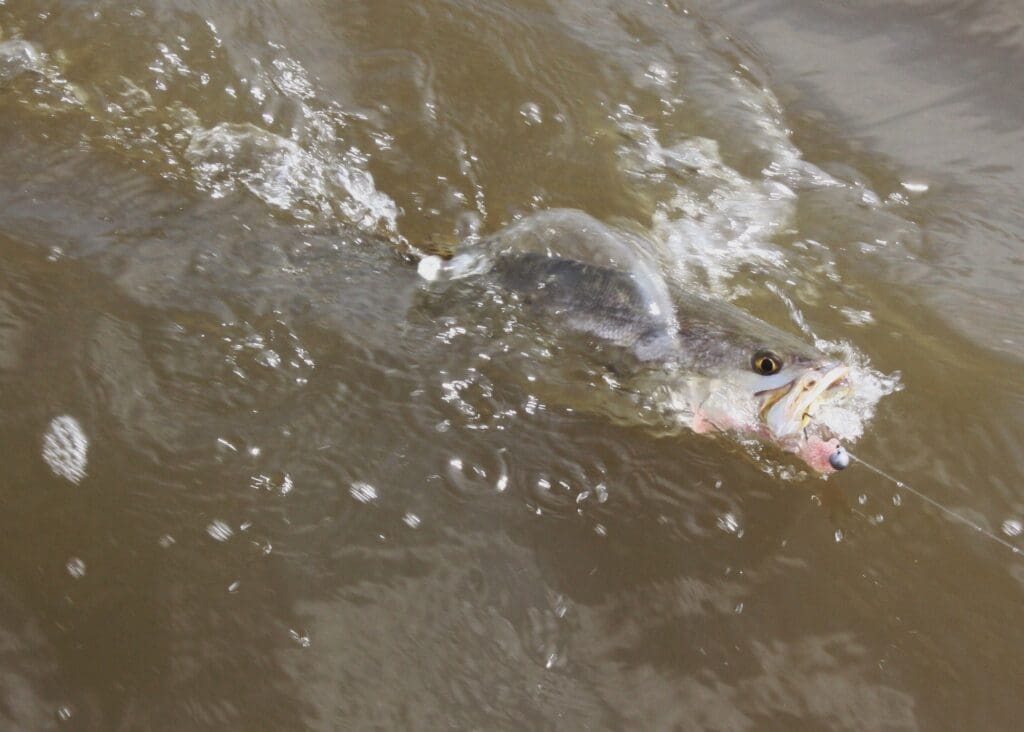
When August heat bakes the bays and marshes, many anglers think the trout bite fades with the dog days. Truth is, some of the best speckled trout fishing of the year happens in late summer if you know where to look. And one of the most overlooked places to find them is in the coastal rivers and marsh drains north of our bay systems.
These areas are natural highways for baitfish like shad (menhaden), and when the bait stacks up, the specks won’t be far behind. The key is learning to pattern the fish as they shadow these schools and positioning yourself where the predators are most likely to ambush.
Follow the Shad
Late summer is prime time for river-running menhaden. You’ll often see schools flipping on the surface, especially at dawn and dusk when the water cools. That nervous, flashing bait is like a neon sign for hungry trout.
Keep an eye on bird activity as well—terns and gulls working over the river usually signal shad pushed up by trout below. If you see shad dimpling the surface, don’t rush through. Kill the big motor, ease in with a trolling motor, and cast soft plastics or topwaters right on the edge of the school.
A bone or chrome topwater at first light can draw explosive strikes. As the sun climbs, switch to soft plastics in natural shad colors, swimming them just under the bait. Matching the hatch here is critical.
Target Shell
Shell equals structure, and structure equals trout. Along the river bends and mouths of bayous, shell beds act as ambush points. Trout will pin shad against these edges, especially when there’s current.
A ¼-ounce jig head tipped with a paddle-tail soft plastic is hard to beat. Work it slow and steady along the shell, feeling for that telltale thump.
Work the Bayou Mouths
Where the marsh drains into the river, fresh and saltwater collide, creating a mixing zone rich with bait. These bayou mouths are like drive-through windows for specks looking for an easy meal.
Fish the outgoing tide, when shrimp, shad, and mullet funnel out of the marsh. Position just off the current seam and work your lures along the edge where dirty water meets green. Trout will stage right there, ambushing anything that washes by.
If the tide is slack, fan-cast around the drop-offs at the mouth. A slow-sinking jerkbait or a soft plastic rigged on a light jig head can coax bites from fish holding tight to the bottom.
Don’t write off late summer trout fishing just because the calendar says it’s hot. The coastal rivers and marsh drains north of our bays offer some of the most consistent action if you’re willing to follow the bait, work the shell, and set up on the bayou mouths.