
Proven Tips for Hunters Who May Not Have Used All Their Buck Tags
Feature Article by MATT WILLIAMS
LISTEN: (6 min, 36 sec)
WHEN I THINK ABOUT late season deer hunting in eastern Texas — that time period when winter ushers in some of the coldest weather of the year and bucks are run down, hungry and slowly regaining their senses following the major rut, I often think about a conversation shared years ago with veteran East Texas deer hunter, Randy Ivy of Nacogdoches. It revolved around the importance of hunting in close proximity to food. Ivy says this is especially true if you’re gunning for a mature animal.
“He’s in survival mode now,” he said. “Food is critical. He’s got to eat, or he’ll die.”
Pineywoods deer hunters Bodie Colwell of Nacogdoches and Bart Doty of Longview couldn’t agree more. Both hunters have brought down some bruisers over the years. They believe hunting in relation to a reliable food source is among the best ways to increase the odds of connecting with a solid buck as hunting season wanes.
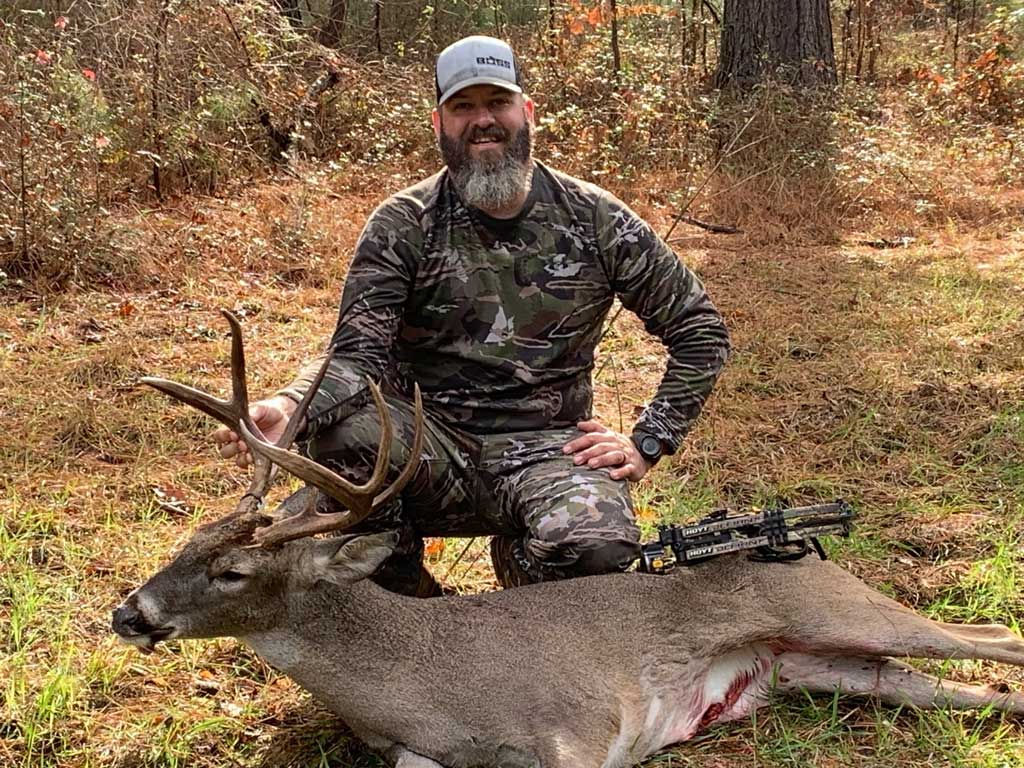 Bart Doty with his December Buck taken in Panola County.
(Photo: Courtesy Bart Doty)
Here are some proven tips for hunters who may not have filled their buck tags yet.
Stringing Out Corn
Colwell is a 63-year-old heavy equipment operator who does most of his hunting really close to home. The set-up affords him the luxury of being able to keep his areas salted with corn rather than relying on automatic feeders that at times may spook more mature animals than they attract.
Though it lacks in nutritional value, corn is high in carbohydrates and is a great source of energy when more preferred natural food sources like acorns and browse can become scarce. Corn also can become habit forming.
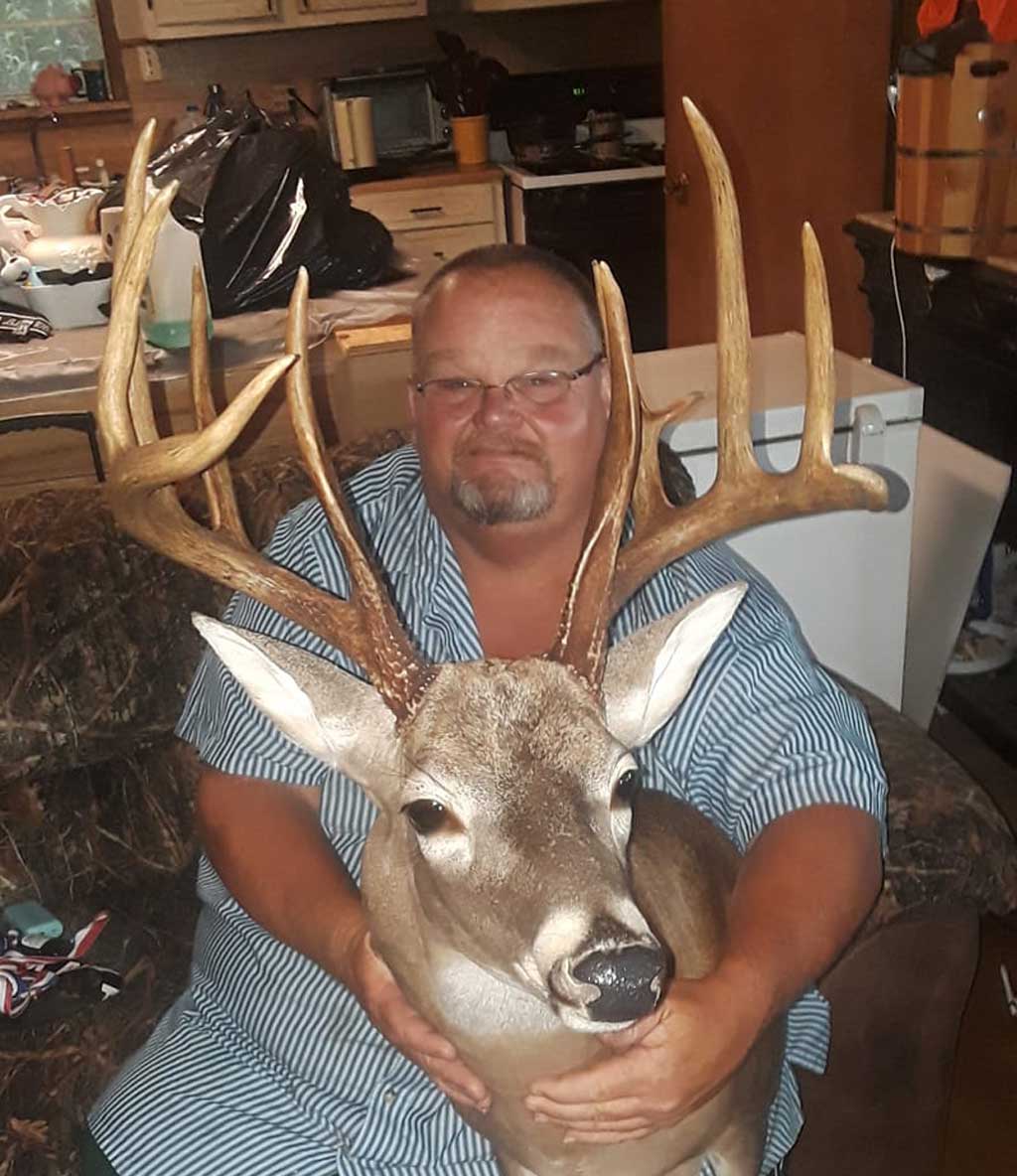 Bodie Colwell took down this bruiser on a December hunt near Nacogdoches.
(Photo: Courtesy Bodie Caldwell)
“I put out corn every day late in the season,” Colwell said. “I might put it out early before I head to work, or in the evening before I go my stand. Once you get them coming to it, they’ll be looking for it.”
Rather than dumping corn in a pile, Colwell “strings it out” along old logging roads and other travel routes near his hunting blind. He’ll typically puts out about 20 pounds at a time.
“I’ll get about 100 yards from my stand, and I’ll string it out for another 100 yards,” Colwell said. “Stringing it out keeps the deer from bunching up. Plus, I can cover multiple trails that might be leading to the logging road.”
Food Plot Savvy
Doty feeds his share of corn throughout the season, but he also relies heavily on food plots to attract deer late in the year and provide them with good shots of protein when they need it the most. The plots are sown and planted in early fall, well ahead of deer hunting’s home stretch when bumper acorn crops start to fizzle and other forage gets nipped by freezing weather.
“Post-rut bucks are run down, and they are hungry,” Doty said. “Once they get the rut out of their system, they’re going to want to fatten back up for the winter, and they are wanting to do it fast. They won’t be too far from a food source unless they are pushed away from it. I’m all about green fields in late season. I’m pretty heavy on wheat and oats, but I’ll also mix in 3-4 pounds of turnips.”
If rain is in the forecast, it might be a good idea to give food plots a light shot of fertilizer in early December.
This will produce new tender growth that may attract deer that may not be coming to corn.
Hunt Near Thickets
Colwell recommends hunting in relation to bedding areas, which are often found in some of the thickest cover on the property. He says it’s best to be there early and late to boost the chances of catching a good buck coming or going. “A mature buck feels safe in a thicket,” Colwell said. “It’s best to hunt the edges. In those types of places, you’ve got to have the mindset that you aren’t going to see a lot of deer, but that you just might see a good one.”
Save Some Spots
“If possible, in a deer lease situation, save some hunting areas away from 4-wheeler traffic and hunting pressure until later in the season,” Doty said. “Hunting pressure may push a good buck into a place like that. They will sanctuary there. On smaller properties that may not even be an option unless you have access to a neighbor’s property.”
Never Give Up
Colwell says his No. 1 rule in late season is to never give up. “You can’t kill him from the couch. Stay in the woods as much as you can. If I come up on a good looking spot, I’ll hunt it. To me, good luck is a big part of it that time of year. You’ve got to be in the right place at the right time.”
Hunt Smart
White-tailed deer are creatures of habit. Unfortunately, so are many deer hunters.
“A lot of hunters make the mistake of hunting the same stands repeatedly and big bucks will learn you better than you learn them,” Doty said. “They’ll show up 10 minutes before daylight and 10 minutes after dark every time. It’s never a good idea to hunt the same spot over and over.”
Watch the Wind
The whitetail’s nose is one of its primary modes of defense. Doty always tries to hunt down wind from where he thinks deer will approach.
“Be really selective when you go in and out,” he said. “I let the wind tell me where I’m going to hunt most of the time. If I’m after a mature animal, I’m going to try my best to be really selective when I hunt him. I’m 100 percent not going to hunt a spot on the wrong wind. That’s black and white.”
Don’t Be Lazy
Doty says it is always a good idea to park your vehicle a good distance from your stand, but not so far that you work up a serious sweat getting there. About 1/4 mile is ideal.
“I’ll rarely get any closer than that,” he said. “If I walk any farther than that I’ll be so sweaty by the time I get there it can defeat the purpose.”
Footprints
Doty says wearing rubber boots to reduce a lingering scent trail is essential. “I highly recommend rubber boots, he said. “You want to leave as small a footprint as you can in the woods.”
Late Bloomers
Mature East Texas does in healthy physical condition will usually cycle into estrus sometime in late October or early November. However, yearling does may not experience their first breeding cycle until a month or so later, possibly as late as mid-to-late December.
Colwell said December hunters should continue to stay on their toes anytime there are does in the vicinity. There could be a late bloomer in the crowd.
—story by MATT WILLIAMS
Quartering a Deer
