
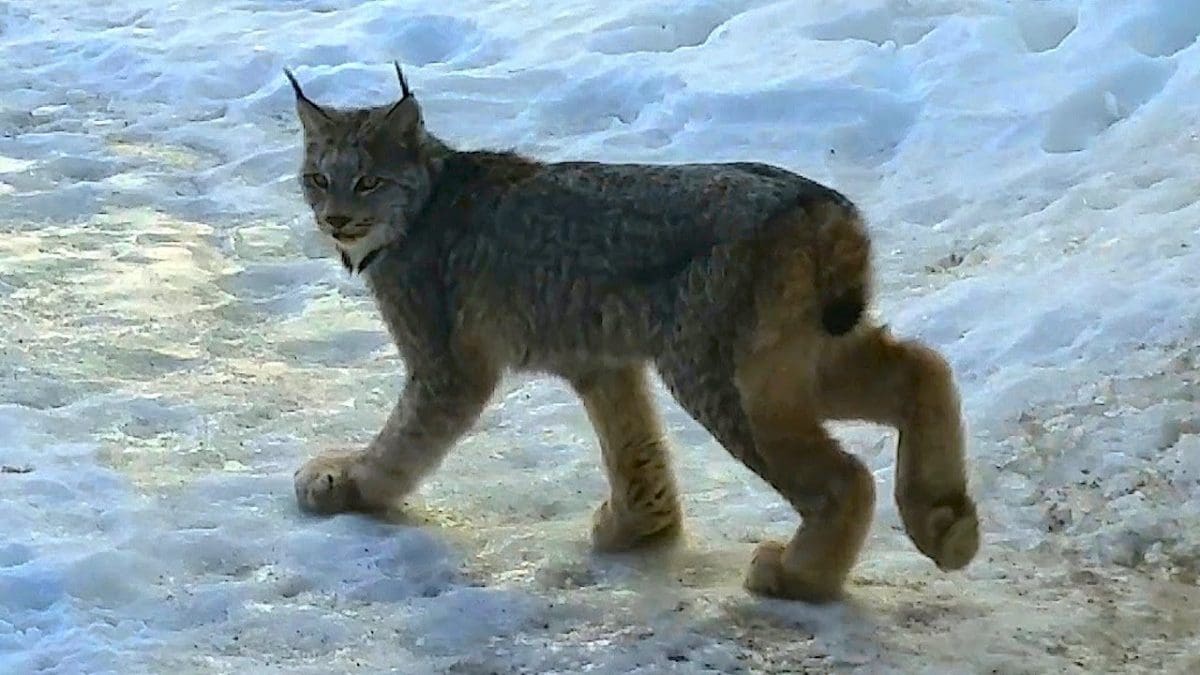
For decades, stories of unusually large wildcats have circulated across the southern United States. Hunters, landowners and rural residents have described animals far bigger than a bobcat, sporting tufted ears, long legs and an unmistakable presence. Many of these sightings are labeled the same way, almost instinctively: Canada lynx.
That identification raises eyebrows among biologists. The Canada lynx, Canada lynx, is a species closely tied to northern forests and deep winter snow. Its confirmed range centers on Canada and the northern tier of the United States, with only limited, well-documented movement into parts of the northern Rockies and upper Midwest.
Yet reports persist far beyond those boundaries. From East Texas to the Deep South, sightings have been reported for generations, often accompanied by the same explanation: the animal was simply too big to be a bobcat.
In some circles, those sightings are tied to more elaborate claims. Stories of secret wildlife stockings — whispered accounts of animals quietly released by government agencies — have become part of the narrative. In Texas, such rumors echo past claims involving other species and are sometimes linked to long-standing mistrust of official wildlife records. The idea that lynx were once released in the South has been repeated often enough to feel plausible to many who have spent their lives outdoors.
The confusion is not without precedent. Throughout the South, mountain lions were once thought to be extinct, despite years of credible sightings later supported by physical evidence. That history has made some observers reluctant to dismiss modern reports outright.
At the same time, wildlife misidentification has played a powerful role in shaping regional folklore. Poor lighting, fleeting encounters and adrenaline-fueled estimates can dramatically alter how an animal is remembered. A large bobcat seen briefly at dusk can become something much more imposing by the time the story is retold.
That distinction matters, because the bobcat, bobcat, is widespread across the South and highly variable in size and coloration. Some individuals grow exceptionally large, particularly in areas with abundant prey. Others appear taller or longer-legged due to posture, terrain or seasonal coat differences. These variations blur the line between reality and perception.
Popular culture has long reflected this ambiguity. Comedian Jerry Clower once joked about a “souped-up wildcat,” capturing how Southerners often describe animals that seem bigger or meaner than expected. In everyday conversation, “lynx” has sometimes served less as a biological label and more as shorthand for an unusually impressive cat.
This documentary explores where those descriptions intersect with science. It examines the confirmed biology and range of the Canada lynx, how it differs from the bobcat, and why generations of Southerners have used the same name to describe very different animals. It also looks at how rumors of secret stockings gained traction and why they continue to circulate decades later.
By separating rumor from record, folklore from biology, and perception from documented range, the film traces how the idea of “lynx in the South” took hold — and why the question continues to surface wherever wild country and human memory overlap.
Chester Moore