
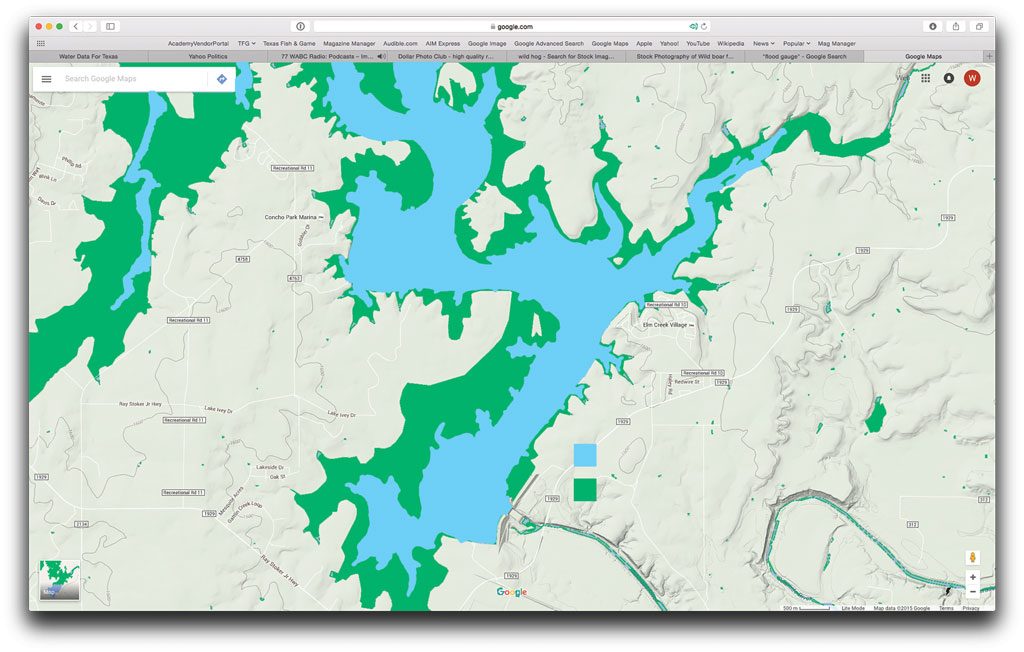
Out on the Colorado and Concho rivers near Eden, O.H. Ivie Reservoir has quietly transformed into one of Texas’ most talked-about bass fisheries. What began as a regional water supply has become a global destination for anglers chasing giant largemouths — a reputation built on outstanding habitat, forage, and big fish production.
O.H. Ivie is a large reservoir formed behind the S.W. Freese Dam in 1990. It spans roughly 19,000 acres of surface water across Concho, Runnels, and Coleman counties and holds more than half a million acre-feet at conservation pool. The shoreline winds roughly 140 miles, with depths exceeding 100 feet near the dam.
The lake’s landscape is a big reason it fishes so well. The basin was never cleared before flooding, so thousands of acres of standing mesquite, oak, juniper, and saltcedar remain underwater. That creates miles of vertical cover and woody structure — perfect ambush points for bass. In the main body of the reservoir, structure tends toward rock, while the Colorado and Concho arms feature mud flats and flooded vegetation. Native plants and spreading hydrilla add to the complexity.
TPWD describes the bass fishery as versatile; largemouth are caught on both live bait and artificial lures, with methods ranging from jigs and soft plastics around timber to Carolina rigs and minnows off deep humps and drop-offs. Trophy bass often come from deeper water — 20 feet or more — where forage and protective cover coincide.
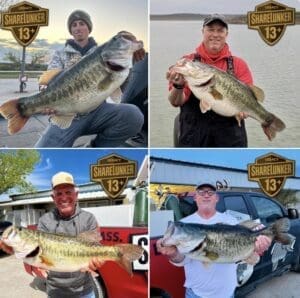
What has truly put Ivie on the map is its consistent production of big bass. The lake has repeatedly dominated the Toyota ShareLunker Program, with dozens of Legacy Class largemouth (13 pounds and up) collected in recent seasons. In fact, O.H. Ivie led the list again in 2025, turning in multiple double-digit ShareLunker entries early in the year.
That big bass success is partly a reflection of excellent forage. TPWD surveys show a robust population of threadfin shad, bluegill, and other prey species that help feed and fatten largemouth. Channel, blue, and flathead catfish, smallmouth bass, white bass, and crappie are also present, adding diversity to the fishery.
Access around the lake is relatively straightforward, with multiple public ramps offering concrete boat launches, camping, and amenities. Day passes and annual vehicle passes make it easy for anglers to plan extended stays on the water.
Though bass fishing is the primary attraction, Ivie’s appeal extends beyond one species. Anglers will find opportunities for catfish, crappie, and white bass throughout the year, making it a well-rounded destination.
Today, O.H. Ivie stands as a testament to what proper habitat, forage, and fishery management can create. For anglers pursuing trophy largemouths, its name now sits alongside the most respected bass waters in the nation — a place where the next personal best could genuinely be the catch of a lifetime.