
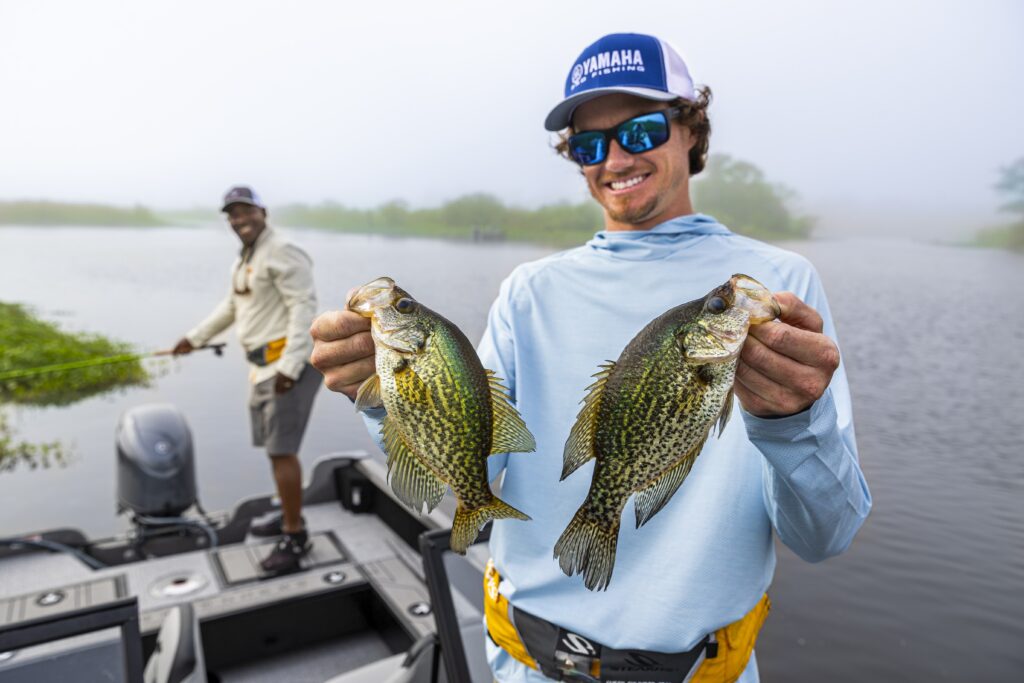
The first warm breath of a Texas spring doesn’t just stir the redbuds and rattle the sycamores along a creek bank—it flips a switch for crappie anglers across the state.
Somewhere between the last blue norther and the first stretch of 70-degree afternoons, big slabs begin sliding out of the depths of Texas reservoirs and pushing toward moving water. If you’re serious about tangling with heavyweight white perch, the creeks are where you need t o be.
o be.
In Texas, a “creek” can mean a lot of things. It might be a winding ribbon of tannin-stained water feeding an East Texas reservoir. It could be a rocky arm on a Hill Country lake. Or it might be a muddy, cypress-lined tributary emptying into a border impoundment. Whatever the setting, these feeder arms become magnets for crappie in the spring.
The Spring Movement
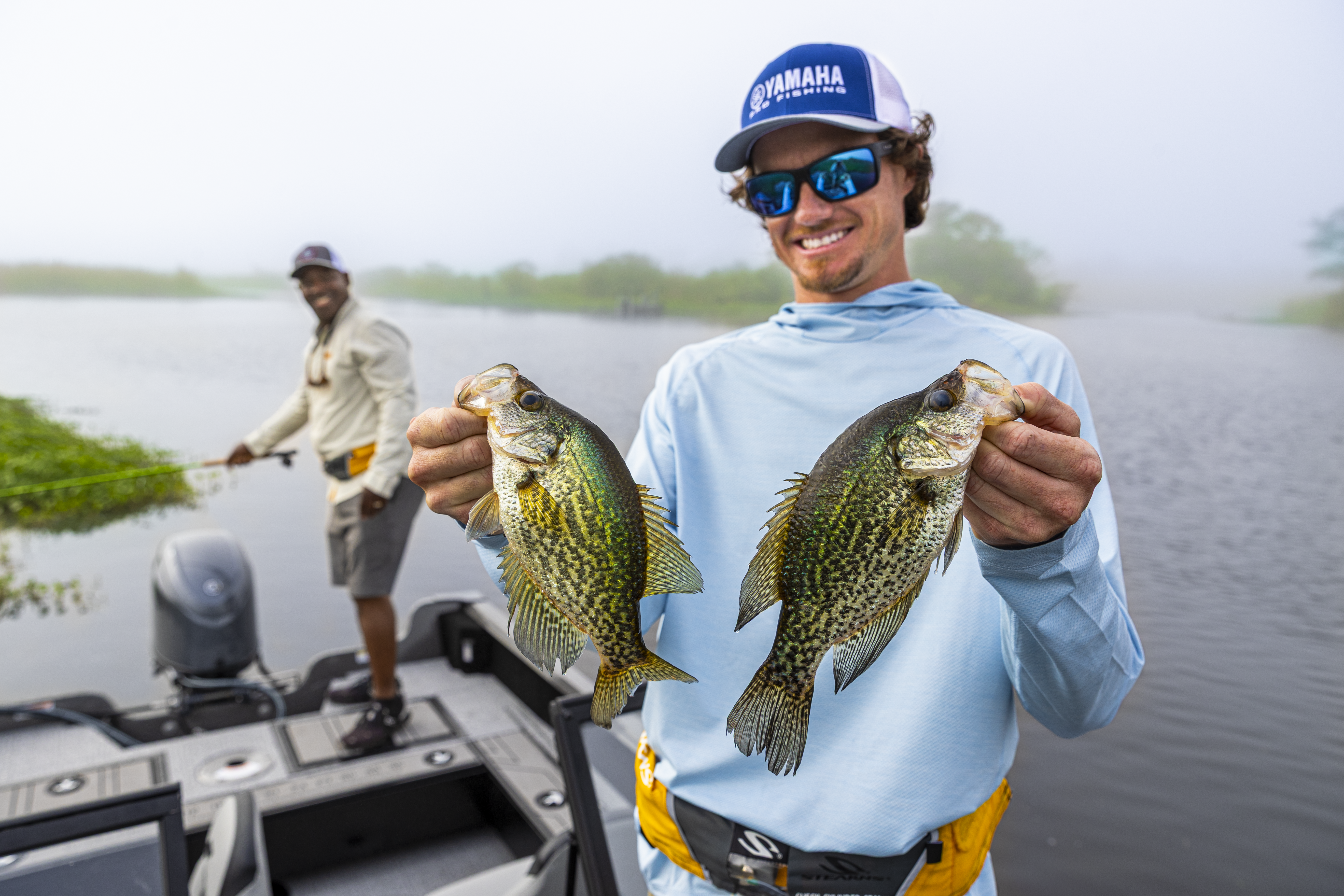
Big crappie don’t move shallow at random. As water temperatures climb into the upper 50s and low 60s, mature females—broad-backed and heavy with roe—begin staging along creek channels. These channels act as underwater highways, guiding fish from winter haunts toward spawning areas.
A good map will show you most of what you need to know. Focus on defined creek channels that swing close to the bank. Target areas where the channel edge comes within casting distance of visible timber, brush, or laydowns. That meeting point of depth and cover consistently holds fish.
Spring rains often add a little color and current to Texas creeks. That stain can improve the bite. In off-colored water, crappie are more comfortable moving shallow during daylight hours and relating tightly to wood.
Key Pieces of Cover
If you want to catch bigger fish, be selective about the cover you fish.
Large crappie favor substantial structure—submerged treetops washed in by winter floods, logjams on outside bends, and isolated laydowns extending from shallow banks into three to six feet of water near a channel drop. In creeks, these pieces of cover break current, collect bait, and provide a staging point before the spawn.
One productive setup is a bend where the outside edge drops to eight or ten feet while the inside flat shelves gradually toward the bank. If wood lies across that transition, it’s worth multiple presentations. Pre-spawn females often hold there before sliding up to spawn.
Pay attention to the bottom composition as well. Sand, clay, and small gravel areas adjacent to wood are prime bedding locations once the water warms further.
Presentation in Tight Water
Creek fishing is usually a close-quarters game. While open-water tactics have their place, tight creeks lined with timber reward accuracy and boat control.
A 10- to 12-foot jig pole allows you to present a 1/16- or 1/8-ounce jig precisely into gaps in heavy cover. In stained water, chartreuse-and-white, bone, and other high-visibility patterns produce well. When runoff muddies the creek, darker combinations such as black-and-chartreuse can stand out better.
Live minnows under a slip float remain effective, particularly when fish are pressured or sluggish after a front. Set your depth so the bait hovers just above the cover. Larger females often suspend slightly higher than smaller males during staging.
Boat positioning is critical. Ease in quietly with minimal trolling motor use. In narrow creeks, noise and hull slap will push fish deeper into brush. Work high-percentage targets thoroughly before moving. It’s common for the largest fish in a piece of cover to bite after smaller ones.
Reading Conditions
Timing varies across Texas. In the southern and eastern parts of the state, crappie may begin moving shallow in late February during warm years. Farther north, March and early April are more consistent.
Watch water temperature closely. When it stabilizes in the 60- to 65-degree range in protected creeks, spawning activity is close or already underway. Males will move onto shallow, firm-bottom areas in one to three feet of water and begin fanning beds near wood or brush.
The pre-spawn period can be even better for trophy-sized fish. During this stage, heavy females hold just off the bank along the first break near the creek channel and feed actively. A stable warming trend can concentrate fish and produce excellent action. A late cold front may pull them back to slightly deeper channel edges, where vertical presentations become more effective.
Stewardship on the Water
A two-pound crappie pulled from a quiet Texas creek in spring represents a healthy fishery and careful management. Selective harvest helps maintain that quality. Keep what you need and release the largest females, especially before they spawn.
Always check current regulations for the lake you’re fishing and follow size and bag limits. Healthy year-classes depend on responsible anglers.
Programs like Yamaha’s Rightwaters campaign are helping to keep our waterways healthy in many ways ranging from water quality to invasive species control. To learn more click here.

Spring creek fishing for crappie is about understanding seasonal movement, identifying the right combination of channel, cover, and water temperature, and making precise presentations in tight spaces. When conditions line up and the fish move into those feeder creeks, the opportunity to catch a true Texas slab is as good as it gets.
Yamaha VF250 V MAX SHO®
For anglers chasing trophy bass across big Texas water, the Yamaha VF250 V MAX SHO® is built for exactly that kind of day. It is known for strong hole shot, tournament-level speed, and the ability to cover water quickly when moving between staging areas and shallow pockets.
Yamaha also notes the VF250 delivers up to 70 gross amps of charging power, which is a major advantage when running multiple graphs, live sonar, pumps, and electronics throughout the day. It is a serious motor designed for serious bass hunters.