
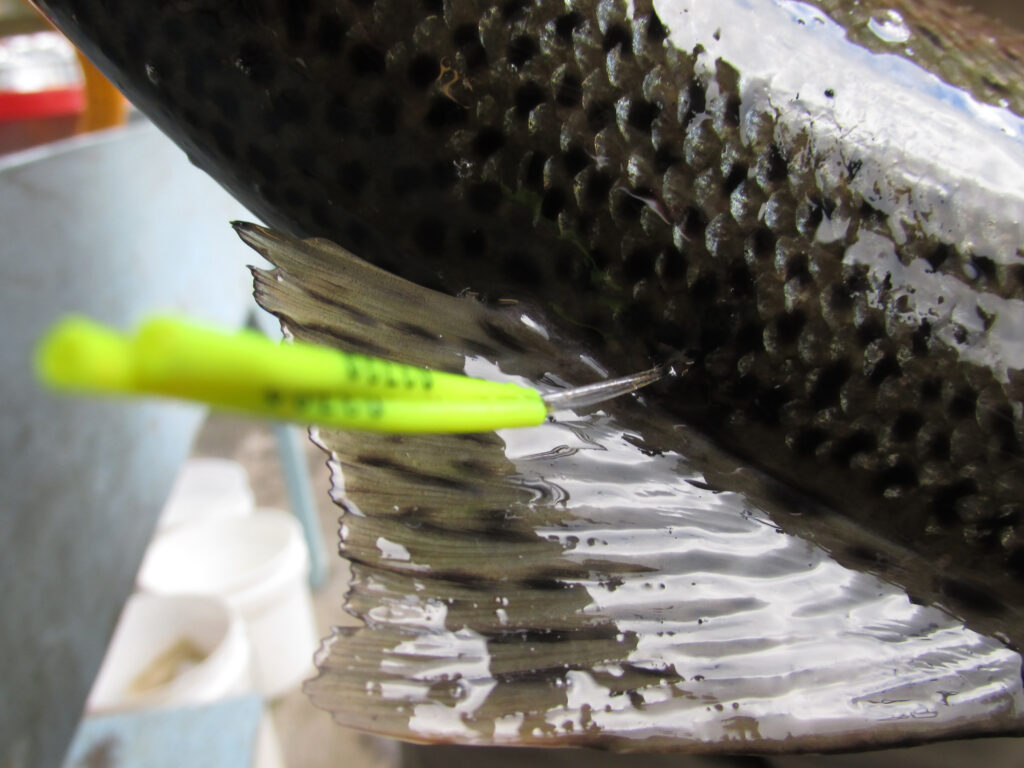
Reporting a tagged fish might feel like a small task in the moment, but it plays a big role in the bigger picture of fisheries conservation. Across the country, research institutions, wildlife agencies, and conservation groups run tagging programs to better understand fish populations. These efforts track everything from growth rates to migration patterns—and they depend heavily on anglers to close the loop.
As Texas Fish & Game boating editor Lenny Rudow says, “There are a million and one fish tagging programs out there… These programs are important for gathering information about fish stocks, catch rates, growth rates, and more.” In other words, every tagged fish represents a data point—but only if someone reports it.
When an angler keeps a tagged fish, reporting is straightforward. Measure the fish, record the weight if possible, photograph the tag, clip it if necessary, and submit the information later. The challenge comes when the fish is being released. In those moments, time is limited, the fish is stressed, and the tag itself can be difficult to read.
Tags are small, often covered in growth, and the numbers and letters can be hard to make out. The best approach is to gently clean the tag—using a fingernail rather than anything abrasive and take multiple photos from different angles. Rotating the tag slightly while snapping several shots can help capture a readable image. Even then, it may take time later to enlarge the photos and study them carefully to confirm the code.
Find more fish with Humminbird XPLORE.
Texas Fish & Game boating editor Lenny Rudow says that even when it’s challenging, the effort is worth it. In one case, anglers worked to document a tag on a small flounder, taking multiple photos and cleaning off growth to read the numbers. Once submitted, the tagging agency was “absolutely ecstatic,” because the report provided updated size and location data—and the fish was released to potentially be caught again, adding even more data in the future.
That’s the key: a released, tagged fish can continue contributing valuable information over time. Each recapture helps scientists build a clearer understanding of fish movement, survival, and population trends. Without angler participation, those insights would be far more limited.
Taking a few extra minutes to document a tag—especially on a fish you plan to release—directly supports sustainable fisheries. It helps guide management decisions and ensures healthier fish stocks for future anglers.
And while conservation is the primary goal, there can be a bonus. In events like the CCA STAR Tournament, anglers who report tagged fish may also be eligible to win prizes. It’s an added incentive—but as Texas Fish & Game boating editor Lenny Rudow says, the real reward is knowing that “in the long run, we’ll all be better off for it—and so will our fisheries.”