

Every time you back your boat down a ramp, you’re making a decision that could impact the future of the lake you’re about to fish.
Most freshwater anglers are conservationists at heart. We practice catch-and-release, support habitat projects, and want our favorite fisheries to be even better for the next generation. But one of the most important conservation efforts doesn’t happen with a fishing rod in your hand. It happens before you leave the boat ramp.
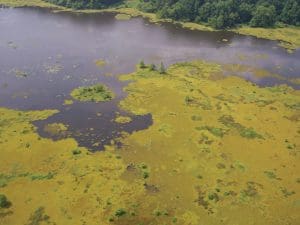
Texas continues to battle some of the most destructive aquatic invasive species in the country, including zebra mussels, giant salvinia, common salvinia and water hyacinth. These non-native invaders don’t just create an eyesore. They alter ecosystems, reduce recreational opportunities, damage infrastructure and cost millions of dollars to manage.
Unfortunately, anglers can unintentionally help spread them from one lake to another.
Giant salvinia and common salvinia are floating aquatic ferns capable of reproducing at astonishing rates. Giant salvinia, in particular, can double its coverage in less than a week under ideal conditions. Dense mats block sunlight, reduce oxygen levels, crowd out native vegetation and make fishing, boating and even swimming nearly impossible. Water hyacinth creates similar floating mats that choke waterways and interfere with both fish habitat and recreation.
Then there are zebra mussels.
Since they first appeared in Texas, these invasive shellfish have spread rapidly. Today they have been confirmed in approximately 40 Texas lakes across seven river basins, along with connected river systems downstream. Once zebra mussels become established in a lake, there is currently no practical way to eliminate them. They attach themselves to rocks, docks, boat hulls, water intake structures and native mussels, altering entire aquatic ecosystems while creating expensive problems for municipalities and lake users alike.
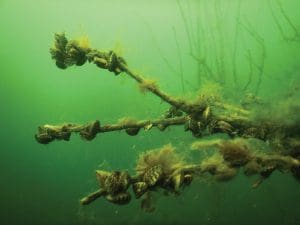
(Photo: Adobe Stock)
The good news is that anglers can play a major role in preventing these invasions.
The key is following the simple Clean, Drain and Dry principles promoted by the Texas Parks and Wildlife Department.
Before leaving any lake, inspect your boat, trailer and equipment. Remove every piece of vegetation, mud and debris you can find. A tiny fragment of giant or common salvinia caught on a trailer bunk, trolling motor or transducer can start an entirely new infestation in another reservoir.
Next, drain everything.
That means livewells, bilges, ballast tanks, bait buckets and any other compartment holding water. Zebra mussel larvae are microscopic and can survive in residual water long enough to be transported to another lake. Draining your boat before leaving or approaching another freshwater body is one of the simplest and most effective ways to stop their spread.
Finally, dry your equipment thoroughly before fishing another lake whenever possible. Opening compartments and allowing gear to air dry significantly reduces the chance that invasive organisms survive the trip.
These aren’t simply recommendations.
In Texas, transporting prohibited aquatic invasive species is against the law. State regulations require boaters to drain all water from boats and onboard receptacles before leaving or approaching a body of fresh water, and invasive plants must be removed from boats and trailers before transport. Violations can result in enforcement action, making invasive species prevention both a conservation responsibility and a legal obligation.
The reality is that agencies like Texas Parks and Wildlife can only do so much. Once an invasive species gains a foothold, management becomes difficult, expensive and often never-ending. Prevention remains by far the most effective strategy.
As anglers, we spend countless hours learning seasonal patterns, selecting the right lures and finding productive structure. Taking an extra five minutes at the boat ramp to clean, drain and dry our equipment may not be nearly as exciting, but it may be the most important thing we do for the future of Texas fishing.
The next trophy bass you catch deserves a healthy lake.
So do the anglers who will launch their boats there years from now.
TF&G Staff