

For many Texas anglers, late summer is a season of transition.
Speckled trout continue roaming grass flats, redfish cruise shorelines and nearshore reefs produce steady action. But for those willing to trade light tackle for heavier gear and spend long hours watching the horizon, August and September offer something entirely different.
This is when some of the Gulf’s greatest gamefish move into range.
Massive tarpon roll along jetties and beachfronts, while blacktip and spinner sharks explode through schools of baitfish in spectacular fashion. It is a season built around screaming drags, blistering runs and aerial displays unlike anything else in Texas saltwater fishing.
The Return of the Silver King
Few fish inspire anglers like the tarpon.
Their chrome scales, enormous size and breathtaking leaps have earned them the nickname “Silver King,” and every year they migrate along the Texas coast following schools of menhaden, mullet and other baitfish.
Late summer is prime time.
From Port Aransas and Port O’Connor to Port Mansfield and South Padre Island, anglers begin searching jetties, passes and beachfronts for one unmistakable sign—a rolling tarpon breaking the surface to gulp air.
According to the Texas Parks and Wildlife Department’s Tarpon Observation Network, August through early fall consistently provides some of the best opportunities to encounter these magnificent fish as they migrate along the coast.
One guide who has built a reputation around those migrations is Capt. Brian Barrera of South Padre Island.
“There’s a real mystique about tarpon,” Barrera said.
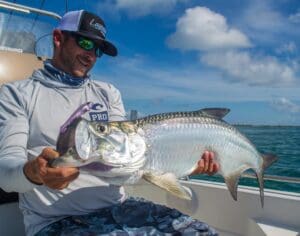
“Some people think the possibility of catching them is out of reach. But the reality is, especially down here, there are lots of tarpon, and anyone who studies up on them, puts some time in and has a little bit of luck can score on these awesome sport fish.”
His words should encourage anglers who have always viewed tarpon as a Florida fish. Texas may not have the same numbers as the Sunshine State, but opportunities have steadily improved over the last decade, particularly on the lower coast.
Fishing the Conditions
One lesson experienced tarpon anglers quickly learn is that these fish rarely cooperate with rigid plans.
Barrera begins many mornings around the Port Isabel jetties throwing artificial lures like D.O.A. Bait Busters whenever rolling fish are visible. Other days, the best approach is matching whatever forage fish happen to dominate the area.
“I bring a cast net and let the water tell me what to fish,” Barrera explained.
“The angler that pays close attention to what’s going on bait-wise and doesn’t have an agenda will, more often than not, do better than those with a rigid fishing plan.”
That philosophy applies to nearly every species along the Texas coast.
Watch the bait, bird and current and the fish usually tell you what they want if you’re willing to pay attention.
Anyone who has ever hooked a tarpon understands why they occupy such legendary status. Texas Fish & Game contributor Kelly Barrerra experienced that firsthand while fishing with Barrera near South Padre Island.
“I felt the unforgettable thump-thump of a tarpon,” she wrote.
What followed became the kind of fishing story every angler hopes to tell.
“Ten jaw-dropping jumps and multiple rolls… Seeing a 150-pound, seven-foot-long fish come blasting from the water depths is simply incredible.”
Those words perfectly capture the magic of tarpon fishing.
The strike is only the beginning.
Seconds later the fish erupts skyward, shaking violently as shimmering scales reflect the morning sun. Many anglers lose fish during those spectacular leaps, but somehow that only adds to the appeal. Landing a tarpon is never guaranteed.
Every hookup becomes a battle of patience, endurance and just a little luck.
Programs like Yamaha’s Rightwaters campaign are helping to keep our waterways healthy in many ways ranging from water quality to invasive species control. To learn more click here.
Tarpon Alley
Although South Padre Island receives much of the attention, experienced upper coast anglers know another stretch of Texas deserves mention.
The beachfront between High Island and Surfside has long been known by many anglers as “Tarpon Alley.”
Every late summer, schools of tarpon follow massive bait migrations along this stretch of coastline. On calm mornings, rolling fish can sometimes be spotted surprisingly close to the beach, while boats patrol just beyond the breakers looking for feeding activity.
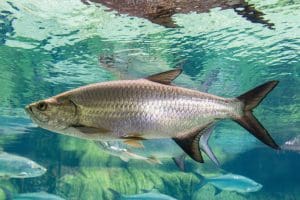
The area’s combination of nearshore depth changes, abundant menhaden schools and favorable currents creates one of the best opportunities on the upper Texas coast to encounter tarpon.
Surf anglers occasionally hook them from the sand.
Kayak fishermen sometimes intercept them just outside the breakers.
Boat anglers spend hours cruising parallel to the beach watching for that unmistakable silver roll.
Like much of Texas fishing, success often comes to those who stay patient and keep their eyes open.
Heavy Gear for Heavy Fish
Tarpon are unforgiving opponents.
Heavy spinning or conventional tackle spooled with braided line gives anglers the power needed to pressure these fish while shortening the fight. Strong fluorocarbon or monofilament leaders help resist abrasion from rough jaws and sharp gill plates.
Circle hooks have become increasingly popular among anglers using natural bait because they generally produce solid corner-of-the-mouth hookups while allowing for healthier releases.
And releasing these magnificent fish has become an important part of Texas tarpon conservation.
Every healthy adult represents years of growth and countless future opportunities for another angler to experience one of the Gulf’s greatest gamefish.
When the Silver Kings Leave, the Sharks Arrive
One of the great things about targeting tarpon in late summer is that if the silver kings don’t cooperate, another world-class gamefish often will.
Blacktip and spinner sharks patrol many of the same waters, shadowing schools of menhaden, mullet and other baitfish around jetties, passes and the beachfront. In places like Tarpon Alley between High Island and Surfside, it’s not uncommon to spend the morning searching for rolling tarpon only to suddenly find blacktips exploding through bait schools in every direction.
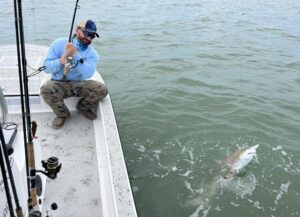
While tarpon have earned the nickname “Silver King,” blacktips and spinner sharks may be the Gulf’s true aerial acrobats.
Blacktips are famous for blistering first runs and repeated leaps that rival many billfish. Spinner sharks take the performance even further, often corkscrewing multiple times as they launch completely clear of the water after inhaling a bait. Their combination of speed, stamina and spectacular jumps has made them favorites among anglers who appreciate catch-and-release big-game fishing.
One of my favorite ways to target them is by establishing a light chum slick around the jetties or along nearshore beachfronts where bait is concentrated. Menhaden, bonito or other oily fish quickly attract sharks, and once they’re in the spread, freelined baits, heavy spoons or even oversized topwater plugs can produce unforgettable strikes.
Some of the most exciting shark fishing I’ve ever experienced came while fishing with Texas Game Wardens Jimmy Owens and Jason Loughlin. Hundreds of blacktip sharks had pushed bait against the jetties, and instead of soaking cut bait, we began casting She Dogs, Super Spooks and Top Dogs into the frenzy.
The results were unbelievable.
Watching sharks charge across the surface and demolish topwater plugs is something every serious saltwater angler should experience at least once. The explosions rival striped bass, giant trevally and even tarpon in terms of sheer excitement.
Spinner sharks add another dimension.
Their trademark corkscrew leaps often send them spinning multiple times before crashing back into the Gulf, making them among the most spectacular fish an angler can hook anywhere in North America.
The Best Time to Dream Big
Late summer offers Texas anglers a rare combination.
You can spend sunrise scanning the jetties for rolling tarpon. Midday might find you battling a blacktip shark launching six feet into the air. On the way home, you can stop over a nearshore reef and catch trout or redfish for dinner.
Few places in America offer that kind of diversity.
Whether you’re chasing silver kings around South Padre Island, watching for rolling fish along Tarpon Alley between High Island and Surfside, or enjoying the aerial antics of blacktip and spinner sharks around Texas jetties, August and September provide some of the most exciting fishing of the year.
Sometimes the fish of a lifetime wears chrome scales.
Sometimes it has a black-tipped dorsal fin.
Either way, when the drag starts screaming and a giant fish erupts skyward against a Gulf Coast sunrise, you’ll understand why late summer has become Texas’ true season of big-game fishing.
Chester Moore