

Few fish are woven into the fabric of Texas saltwater fishing like the spotted seatrout, better known to most of us as the speckled trout. Whether you’re drifting the shell reefs of East Matagorda Bay, wading the legendary waters of Baffin Bay or casting topwaters across Sabine Lake at first light, chances are you’ve spent countless hours chasing these iconic gamefish.
Most anglers know where to find them, what they eat and when they’ll crush a Super Spook or soft plastic. But beneath that familiar silver body sprinkled with black spots is one of the Gulf Coast’s most fascinating fish.
Here are five of the strangest facts about speckled trout—and why they make this Texas favorite even more remarkable.
1. Speckled Trout Hold Underwater “Conversations”
Ever wondered why speckled trout belong to the drum family?
It’s because they actually make sounds.
During spawning season, males contract specialized muscles against their swim bladder, creating a low-frequency drumming sound that attracts females. Scientists have even located spawning aggregations by placing underwater microphones, known as hydrophones, in coastal bays and literally listening for the fish “talking.”
According to NOAA Fisheries research, these drumming sounds become especially active during evening and nighttime spawning periods, when large numbers of trout gather to reproduce.
The next time you’re easing across a shallow reef on a calm June evening, thousands of speckled trout could be carrying on an underwater chorus just a few feet below your boat—and you’d never hear a thing.
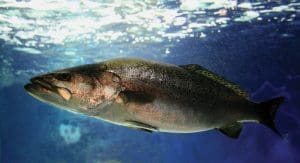
2. They’re Not Really Trout
This one surprises even experienced anglers.
Despite their common name, speckled trout aren’t trout at all.
According to the Texas Parks and Wildlife Department, spotted seatrout (Cynoscion nebulosus) belong to the drum family, Sciaenidae, making them much more closely related to red drum, black drum, croaker and weakfish than to rainbow or brown trout.
That family connection explains several characteristics anglers recognize immediately.
Like other drum species, they produce sound. They also possess powerful shoulders and a fighting style that’s quite different from freshwater trout.
The name “trout” simply stuck over time because early fishermen thought they resembled the trout species they already knew.
3. Big Females Are Egg-Producing Machines
Every experienced trout fisherman appreciates a big sow trout.
Science gives us another reason.
Unlike many freshwater fish that spawn only once each year, speckled trout are multiple spawners. During the warm months they may spawn repeatedly over an extended season.
Texas Parks and Wildlife biologists note that spawning typically peaks when water temperatures climb into the upper 70s and low 80s, with activity occurring primarily after sunset.
Large females can produce millions of eggs during a single spawning season, making every mature breeder enormously valuable to maintaining healthy populations.
It’s one more reason many Texas anglers voluntarily release the biggest trout they catch.
Those giant females aren’t just trophies.
They’re the future of the fishery.
4. Their “Ear Stones” Record Their Entire Lives
One of the most incredible parts of a speckled trout isn’t visible from the outside.
Hidden inside its head are tiny calcium carbonate structures called otoliths, often referred to as ear stones.
These structures grow throughout the fish’s life, adding annual growth rings much like a tree.
But that’s only the beginning.
NOAA researchers have found that otoliths also preserve chemical signatures from the waters a fish inhabits throughout its lifetime. By analyzing those chemical fingerprints, fisheries scientists can determine where individual trout originated, distinguish hatchery fish from wild fish and better understand how trout populations move throughout estuaries.
It’s almost like every speckled trout carries a biological diary inside its head.
5. Every Speckled Trout Wears a One-of-a-Kind Coat
Take a close look at the next trout you catch.
Notice the black spots.
No two fish display exactly the same arrangement.
The number, size and placement of those spots vary from fish to fish, creating patterns as unique as fingerprints. Some trout are heavily spotted from head to tail, while others carry only scattered markings.
Every now and then, anglers even encounter unusually colored fish displaying exceptionally pale, golden or bluish hues—rare genetic variations that become local legends.
It’s a reminder that even among one of Texas’ most familiar gamefish, nature never produces exact copies.