
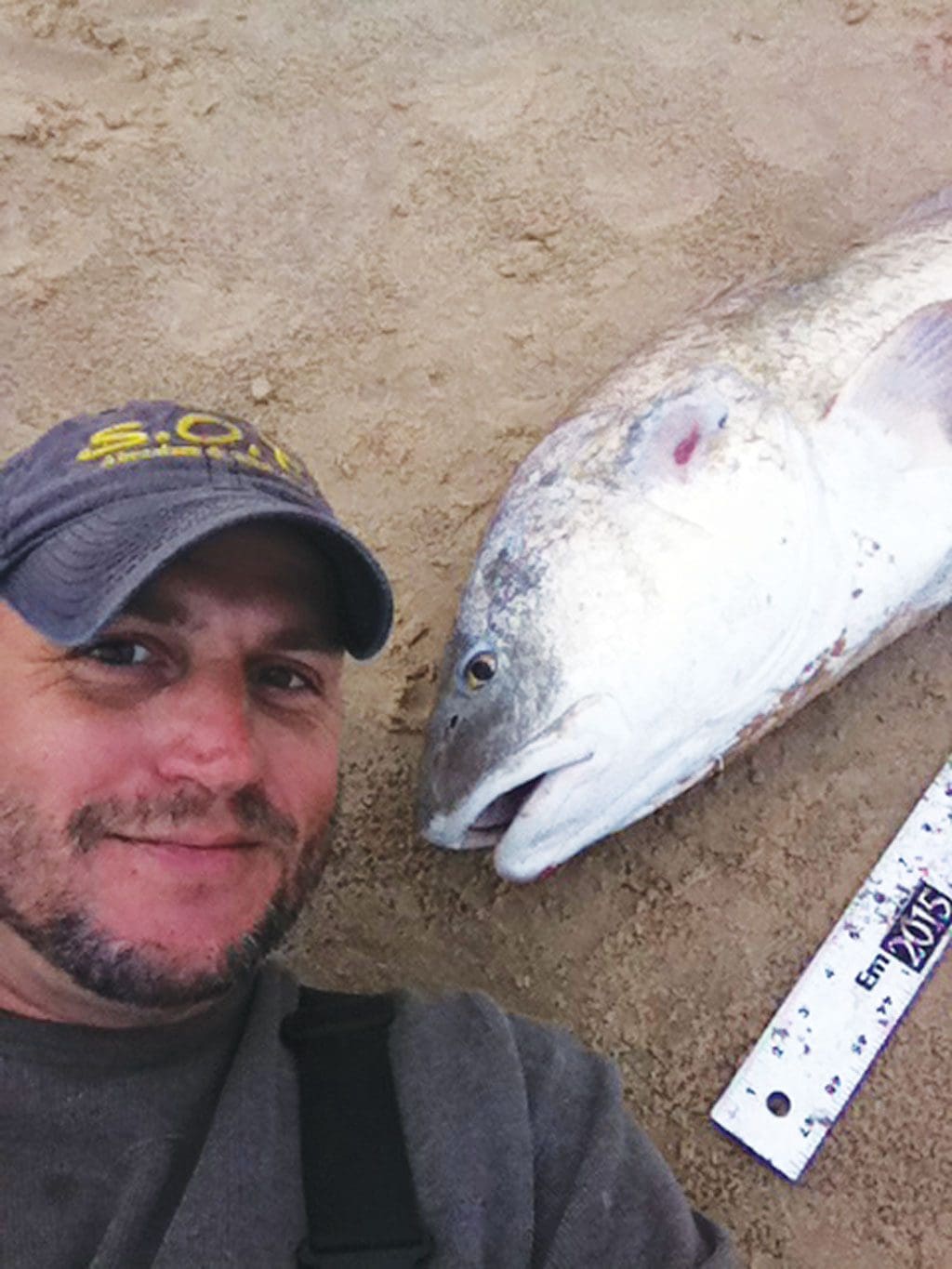
There is no easier way to catch a bull redfish from the Texas surf than soaking a chunk of fresh mullet or cracked blue crab on the bottom.
But easy isn’t always the point.
Catching a 30-, 40- or even 50-pound-class redfish after making the cast and working an artificial lure through the surf is a completely different experience. It is also considerably more difficult.
Texas Parks and Wildlife Department notes that mature red drum live primarily in the Gulf and that during fall, particularly around stormy weather, large adults concentrate along Gulf beaches in what anglers call the “bull redfish run.” TPWD also specifically recommends heavy spoons and slow-sinking, fish-shaped plugs for surf reds.
The key to catching them on artificials is putting the lure where the fish are instead of blindly covering miles of empty Gulf.
Find the Highway
Bull reds use guts, cuts through sandbars and areas where currents concentrate bait. Watch for mullet flipping, birds working, muddy streaks and especially nervous baitfish. Jetties and passes are prime areas because they funnel bait and create current seams, but bulls can appear virtually anywhere along the beachfront during the fall run.
Don’t assume the fish are beyond casting range. Reds regularly travel the first and second guts, and under the right conditions big fish can be surprisingly close to shore.
Spoon-Feed the Bulls
If I could carry only one lure for this game, it would be a heavy spoon.
Gold, silver and copper all have their moments. The real advantage is casting distance. A dense spoon punches through an onshore breeze and allows you to cover huge amounts of water. TPWD has long recommended heavier spoons for surf reds, and gold spoons remain a Texas redfish standard.
Don’t automatically burn it back. Bull reds frequently feed near the bottom. Cast beyond a likely travel lane, allow the spoon to sink and retrieve it just fast enough to maintain its wobble. In deeper guts, occasionally letting it flutter toward bottom can trigger a following fish.
Take It on Top
Topwaters are less consistent, but when conditions are right, nothing compares.
Early mornings with relatively calm surf and visible bait are prime. Large walking baits and noisy surface plugs can call fish from surprising distances. Work them aggressively around bait concentrations, but experiment with pauses. A bull red detonating on a topwater in waist-deep Gulf water is one of the great thrills in Texas fishing.
Large paddletails, sinking plugs and other baitfish imitations round out the arsenal. Match them to the size of the mullet and other forage you’re seeing.
Use tackle with enough backbone and line capacity to handle a powerful fish without turning lure fishing into an endurance contest. A longer rod also provides the casting distance needed to reach outer guts and cuts.
Most importantly, keep moving and keep casting.
Bait fishing allows scent to bring a bull red to you. Lure fishing requires you to find the red and convince it to strike.
That’s precisely why catching one this way means so much more.