
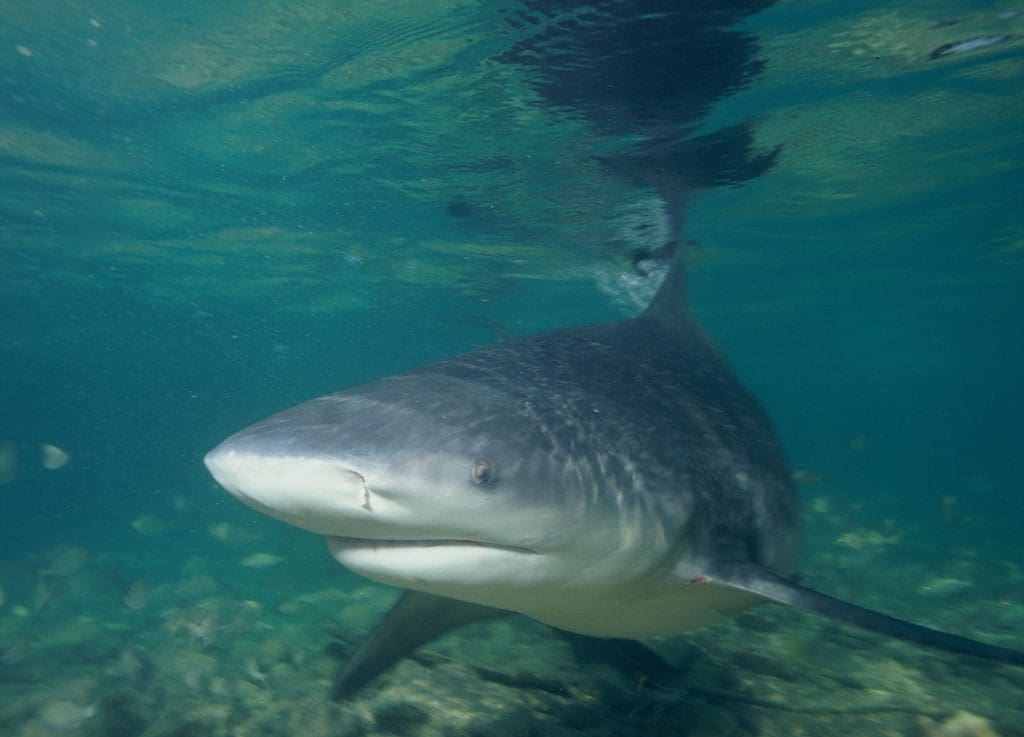
Sharks are a vital part of healthy marine ecosystems, but shark depredation has become a conservation challenge in some popular sport fisheries.
Depredation occurs when a shark attacks or consumes a fish hooked by an angler. Post-release predation happens when a shark takes a fish shortly after it has been released. In either situation, anglers can sometimes reduce the risk simply by recognizing what is happening and changing how—or where—they fish.
Bonefish & Tarpon Trust (BTT) has been studying the issue in the Florida Keys through its Shark Depredation Project, launched after anglers and guides reported increasing interactions with sharks. BTT research has examined which sport fish are most vulnerable, which shark species are involved and how fishing practices may influence these encounters.

The issue can have real conservation implications. BTT research on permit at Western Dry Rocks in the Lower Florida Keys found that more than 30 percent of permit hooked during catch-and-release fishing at this important spawning site were eaten by sharks before they could be landed. The research helped inform Florida’s establishment of a seasonal fishing closure at Western Dry Rocks during the permit spawning season.
There’s a practical lesson here for everyday anglers.
If you’re fishing a reef, wreck or other structure and sharks begin repeatedly taking hooked snapper, grouper or other sport fish, consider moving. Continuing to fish the same location can provide predators with repeated opportunities to intercept struggling fish.
The same thinking can apply when targeting tarpon or other large catch-and-release species. If numerous big sharks begin following hooked fish or repeatedly attacking them during the fight or immediately after release, relocating may be the best conservation decision.
Tackle matters, too. Use equipment heavy enough to land fish efficiently, particularly when predators are present. Long fights can exhaust a fish and leave it more vulnerable after release. Have release tools ready, minimize handling and get fish back into the water efficiently.
Sharks aren’t doing anything unusual when they take advantage of a struggling fish. Anglers, however, can recognize when their fishing activity is creating repeated opportunities for depredation.
Sometimes conservation means releasing a fish properly. Other times it means starting the motor and finding another place to fish.