
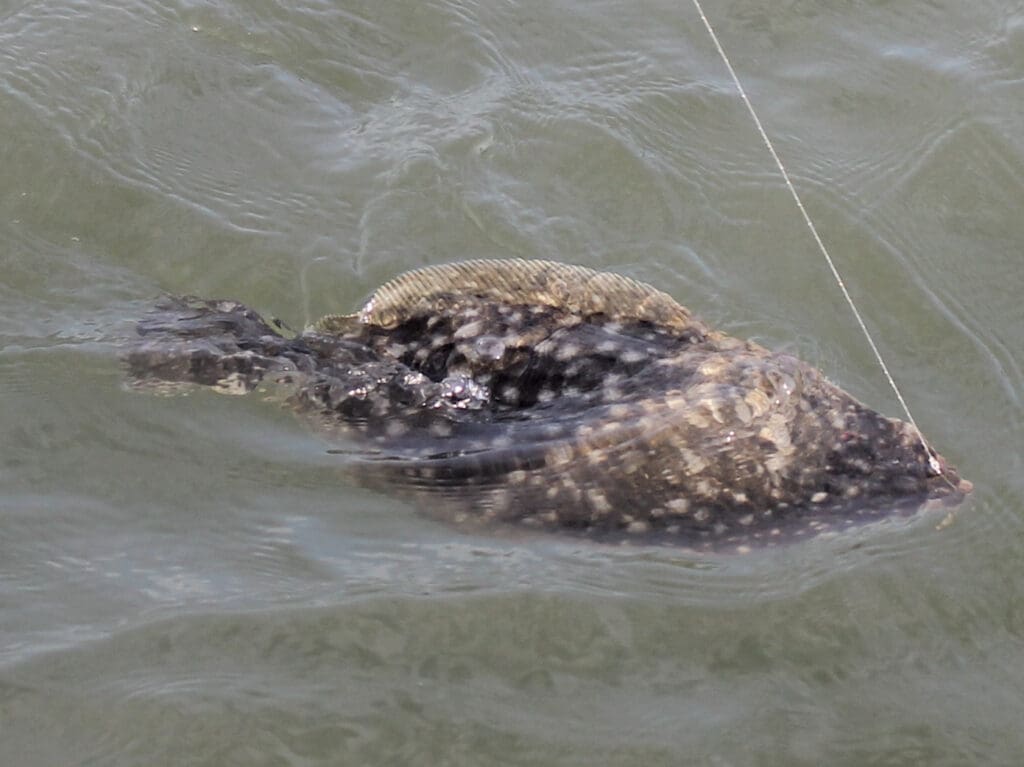
September is not when most Texas anglers think about the fall flounder run.
That’s exactly why I like fishing for them then.
The famous flounder migration toward the Gulf peaks much later in the fall, but migrations don’t happen all at once. Flounder begin moving in stages, and the first push can occur in late August and September as fish that spent the summer in marshes, bayous and backwater systems begin working their way toward larger bodies of water.
For anglers who understand the habitat, this creates an opportunity to intercept flounder before they reach the traditional fall-run locations.
The key is fishing the transition zones.
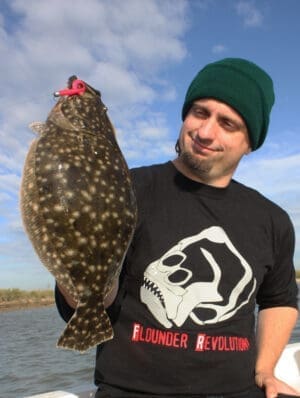
One of my favorite places to start is the outer end of a bayou where it opens into a main lake or bay. During summer, flounder can be scattered far back into marsh systems, along small drains and throughout the twists and turns of bayous. As September progresses, some of those fish begin moving outward.
They don’t necessarily swim straight from the marsh to a pass leading into the Gulf.
They stop along the way.
A bayou opening into a large bay or lake creates exactly the kind of habitat a flounder can use to its advantage. Moving water carries shrimp, menhaden and other forage through these areas, and changes in depth and current create ambush opportunities.
Flounder are built for this kind of feeding.
Instead of chasing bait over long distances like speckled trout or redfish often do, flounder can settle onto the bottom near a productive current seam and wait for food to come within striking distance.
That is why I pay particular attention to the outer corners of bayou mouths.
Look at both sides.
One side might have water sweeping rapidly around the point while the other contains an eddy or pocket of slower water. That softer water can be extremely important, particularly when small menhaden are present.
I’ve focused on menhaden in my flounder fishing for many years. Shrimp, mullet and other forage are certainly important, but there is something about concentrations of small menhaden that attracts flounder.
Watch the water instead of simply casting blindly.
If small menhaden are flipping around a bayou mouth and you can see them gathering in an eddy or being swept around a point, you’ve found something worth fishing thoroughly.
Move Out to the Points
The next habitat I target is the first significant point outside the bayou along the main lake or bay shoreline.
This is an overlooked early-migration location.
Think about the route those fish are taking. A flounder moving out of a bayou suddenly encounters a much larger body of water. Instead of continuing across open water without stopping, fish can use shoreline structure as they gradually move through the system.
Points are natural stopping places.
A point extending into the bay changes the direction and speed of the current. It can concentrate bait on one side, create slack water on the other and sometimes produce a small drop-off at its outer edge.
All three features can hold flounder.
Don’t assume you need some dramatic piece of structure. A subtle point that extends only a short distance farther than the surrounding shoreline can be enough to alter current and create an ambush zone.
Fish the point from several angles.
I like to work the inside edge, the tip and then the outside edge leading toward the main body of water. If there is a noticeable depth change off the point, spend additional time there.
Flounder have an affinity for edges.
That might be the edge of a channel, the edge of a current seam, the edge of a drop-off or simply the boundary between moving and slack water. When several of those edges come together around a point, the location becomes even more interesting.
Follow the Bait
Habitat without forage isn’t nearly as interesting as habitat loaded with something for flounder to eat.
That’s why bait can help anglers eliminate tremendous amounts of water.
There might be miles of shoreline and dozens of points in a large bay system. Trying to fish every one of them would be a waste of time. Instead, look for life.
Menhaden flipping on the surface immediately get my attention. So do shrimp jumping from predators and concentrations of mullet working along a shoreline.
Bird activity can provide another clue.
The objective isn’t necessarily to find huge feeding frenzies. Sometimes the best flounder spots contain subtle signs—a few nervous baitfish around an eddy or small menhaden repeatedly dimpling the surface along one side of a point.
Combine those signs with good bottom structure and moving water, and it’s time to slow down.
Learn about Suzuki’s Clean Ocean Project
Flounder often concentrate in surprisingly small areas.
I’ve caught numerous fish from spots no bigger than an average living room because the combination of current, bait and bottom structure put everything the fish needed in one place.
That’s another reason September anglers should resist the temptation to constantly move.
Once you catch a flounder, make several more casts to exactly the same area. There may be another fish lying only a few feet away.
Fish the Route
The biggest advantage to targeting September flounder is understanding that you’re fishing a migration route rather than the final destination.
Start inside the outer reaches of a productive bayou and work toward its mouth. Fish the corners and current breaks where it meets the main body of water. Then move onto the adjacent shoreline and investigate the first prominent points.
Essentially, you’re trying to determine how the flounder are moving out of the system.
Some days they may still be well inside the bayou. On another trip, the better concentration might be at its mouth. After changing weather or tides, fish may be positioned farther down the main shoreline.
Let the bites tell you where that day’s fish are positioned.
And pay particular attention when the first hints of fall begin showing up along the coast.
I have long called this early movement the “first push.” Small cool fronts arriving in late summer and early fall can correspond with flounder beginning to reposition from their summer habitat.
It doesn’t take a powerful November cold front.
Sometimes the first modest break from summer weather is enough to get things moving.
That movement is what September flounder fishing is all about.
Most anglers are waiting for the classic fall run when flounder concentrate near channels and passes on their way toward the Gulf. That’s certainly an exciting fishery, but there’s no reason to wait for those fish to arrive there.
Go find them first.
Find the bayous that drain productive marshes. Follow them toward the main bay or lake. Study the outer edges, current seams and eddies. Then investigate the points along the main shoreline.
Most importantly, find the bait.
September flounder are already beginning their journey.
The angler who understands the habitat can be waiting for them along the way
Chester Moore