
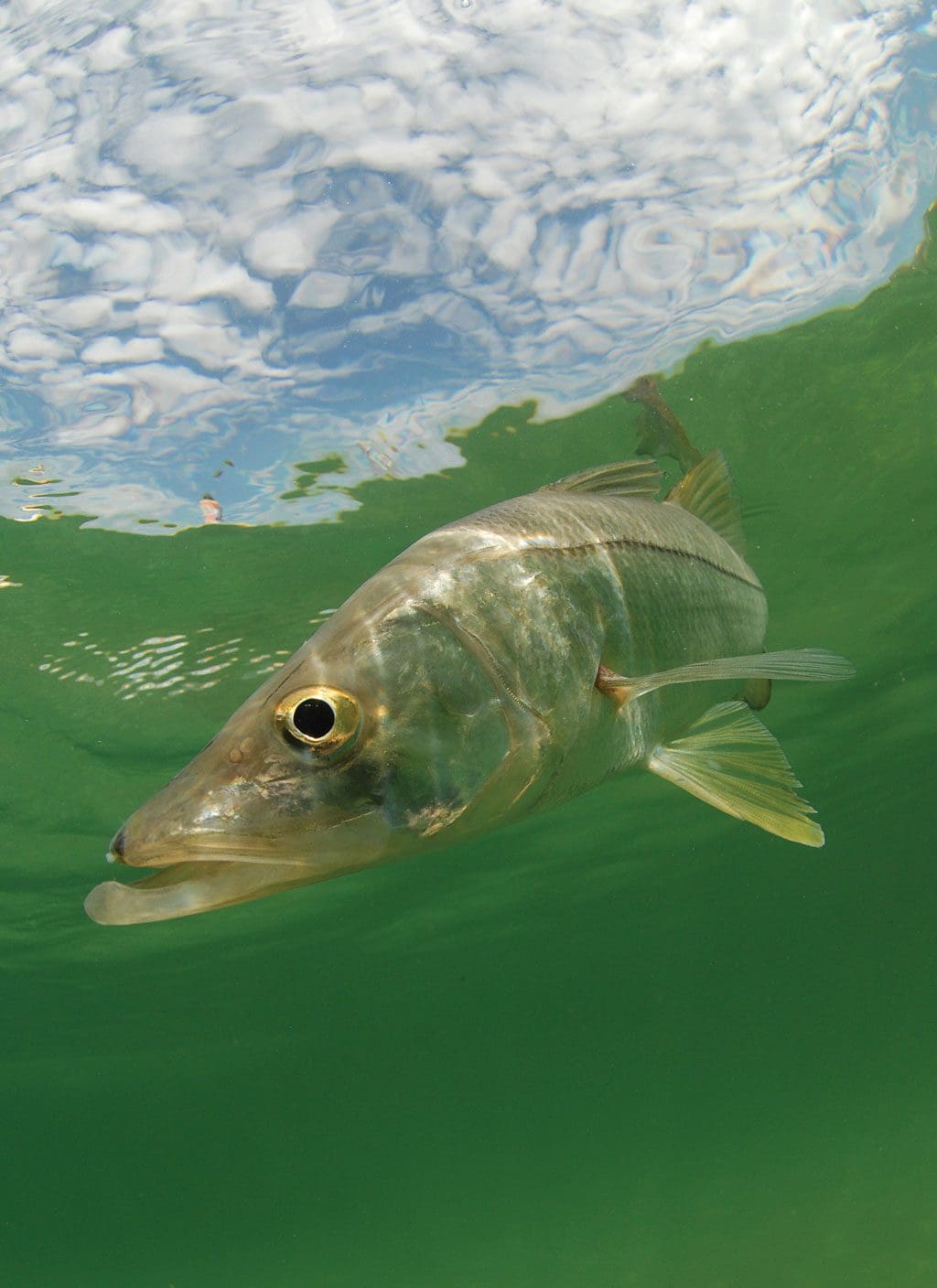
When Texas anglers think about snook, they usually look south.
The Lower Laguna Madre is unquestionably the center of Texas snook fishing, but these tropical game fish aren’t confined to the southern end of the coast. Snook occur much farther north, including Matagorda and Galveston bays and even the Sabine Lake ecosystem.
I got an interesting reminder of that years ago when an angler sent me a photo of a snook weighing about seven pounds caught in the Neches River several miles north of Sabine Lake.
That’s a long way from South Padre Island.
And there is scientific evidence showing snook really do range this far north.
A 2021 peer-reviewed study by Texas Parks and Wildlife Department biologists Ethan Getz, Andres Garcia and Catherine Eckert examined TPWD’s fishery-independent sampling from 1982 through 2019. The researchers used nearly four decades of gill-net and bag-seine data to examine the distribution and biology of common and fat snook in Texas.
Their findings are eye-opening for upper-coast anglers.
Common snook were documented all the way to Sabine Lake, where one was collected. Galveston Bay produced eight common snook and one fat snook for nine total.
Cedar Lakes produced four common and three fat snook. East Matagorda Bay produced 34 common snook and two fat snook for 36 total.
Matagorda Bay produced 22 snook—13 common and nine fat.
These aren’t angler reports. These are fish documented through standardized scientific sampling conducted over decades.
There is also rod-and-reel evidence.
According to TPWD’s official water-body records, Jason Farmer caught the Galveston Bay common snook record May 16, 2018. The fish weighed 6 pounds and measured 27.25 inches.
Fat snook add another interesting dimension to the upper-coast story. They’re smaller than common snook, but the TPWD sampling documented them all the way north to Galveston Bay. They were even better represented around Matagorda, including nine documented in the Matagorda Bay system.
None of this means Sabine Lake or Galveston Bay is about to become the next Lower Laguna Madre. Of the 1,206 snook documented in the study, 921 came from the Lower Laguna Madre. South Texas remains the state’s snook stronghold by an enormous margin.
But the upper-coast fish are real.
I’ve personally been sent photographic evidence of an approximately seven-pound snook caught several miles up the Neches River. TPWD has an official six-pound Galveston Bay record, and decades of scientific sampling have documented common snook all the way to Sabine Lake and fat snook as far north as Galveston Bay.
And if you want to know just how big a Texas snook can get, consider this.
According to Texas Parks and Wildlife Department records, Louis Rawalt caught a 57.5-pound common snook from Texas Gulf waters in 1937. The record has stood for nearly 90 years.
That’s remarkable enough, but here’s where it gets really interesting.
The International Game Fish Association’s current all-tackle world record for common snook is a 53-pound, 10-ounce fish caught by Gilbert Ponce at Parismina Ranch, Costa Rica, in 1978.
In other words, the official Texas record is 3 pounds, 12 ounces heavier than the IGFA world record.
Whatever circumstances prevented that old Texas giant from becoming the recognized world record, one thing is certain.
Texas has produced one absolutely enormous snook.
Chester Moore