
America’s lakes and rivers are more than places to catch fish. They’re where generations of anglers have learned to cast, caught their first bass and developed a lifelong appreciation for the outdoors.
In Texas, those traditions run deep. From chasing giant largemouth bass on Sam Rayburn and Toledo Bend to catching crappie on Lake Fork or catfish along the Trinity River, freshwater fishing is an important part of our outdoor heritage.
But protecting these opportunities requires more than maintaining healthy fish populations. It also means taking care of the waters where those fish live, and that responsibility extends beyond fisheries management.
It’s a message Suzuki Marine has been spreading through conservation efforts involving lakes, rivers and coastal waterways around the world.
A Conservation Effort That Started at a Lake
Interestingly, Suzuki’s worldwide cleanup effort has its roots in freshwater.
In 2010, Suzuki Marine employees began cleaning up the area around Lake Sanaru in Hamamatsu, Japan, where the company developed its first outboard motor. The effort eventually expanded internationally as the Clean-Up the World Campaign, bringing together Suzuki employees, distributors, dealers and volunteers.
That freshwater beginning is particularly interesting considering the initiative’s eventual development into the broader Suzuki Clean Ocean Project, launched in 2020.
Despite the name, Suzuki’s conservation activities are not limited to saltwater. The company specifically includes rivers, lakes and ponds among the waterways targeted by its cleanup efforts. The objective is to remove discarded materials from these environments while encouraging greater awareness of the importance of protecting aquatic resources.
For Texas anglers, that message hits close to home.
A discarded fishing line, plastic container or other piece of trash may seem insignificant compared with the enormous size of a reservoir like Toledo Bend. However, debris can accumulate around boat ramps, shorelines, creek channels and other areas used by both people and wildlife.
Fishing line can entangle birds, turtles and other animals, while accumulated trash can diminish the experience for families who come to these waters to fish, boat and enjoy the outdoors.
Bringing Conservation Home
Suzuki’s cleanup efforts have also taken place in the United States.
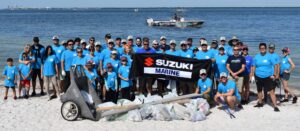
In January 2019, 18 members of the Suzuki Marine team participated in a cleanup at Long Beach Marine Stadium and Marina Vista Park in California. Working along the waterfront, volunteers collected more than 12 bags of trash from lawns, sidewalks and shoreline areas.
Although this particular effort took place in a coastal setting, the same principles apply to freshwater reservoirs throughout Texas. Whether it’s a heavily used boat ramp on Sam Rayburn or a shoreline access area along a smaller community lake, keeping litter out of the water benefits everyone who uses those resources.
Suzuki has also documented freshwater cleanup activities overseas. At Lake Necko in Poland, a Suzuki Marine dealer joined volunteers and local schoolchildren in 2022 to remove debris from the shoreline. According to Suzuki, the effort collected approximately 350 kilograms of trash in just a few hours.
These examples demonstrate how conservation can bring together businesses, families and local communities around a common purpose. They also show that protecting waterways doesn’t always require massive restoration projects or complicated solutions.
Sometimes it starts with people simply taking responsibility for the places they enjoy.
Protecting Texas Fishing Waters
Texas is home to some of the finest freshwater fishing opportunities in America. Lakes such as O.H. Ivie, Lake Fork, Sam Rayburn and Toledo Bend are known for producing exceptional largemouth bass, while smaller lakes and rivers provide outstanding opportunities for crappie, catfish, sunfish and other species.
These fisheries are important economically and recreationally, but their value goes far beyond those considerations. For many families, fishing provides an introduction to the outdoors that can lead to a lifelong interest in wildlife and conservation.
A child catching a first bluegill from a dock may not be thinking about water quality or habitat protection, but those experiences can help develop an appreciation for the natural world.
Fishing-related debris is one area where anglers can make an immediate difference. Discarded monofilament and braided fishing line can remain in the environment for long periods and pose entanglement hazards to wildlife. Plastic bottles, food packaging and other litter can accumulate around fishing locations, particularly after heavy rains or periods of high recreational use.
Fortunately, doing something about these problems doesn’t always require an organized conservation event. Anglers can help by securing trash aboard their boats, properly disposing of used fishing line and picking up litter around their favorite fishing spots.
Fishing clubs, tournament organizations and local communities can take things a step further by organizing cleanup projects at popular boat ramps and shoreline access areas.
These efforts don’t replace the need for sound fisheries management, habitat restoration or water quality protection. However, they offer a practical way for people to take responsibility for the resources they enjoy.
The next time you head to the lake, consider taking a few extra minutes to pick up discarded fishing line or remove trash from the shoreline. It’s a small investment of time that can make a difference for wildlife and other anglers.
After all, protecting our fishing traditions begins with protecting the waters that make them possible.
To learn more about Suzuki Marine’s conservation efforts, including its worldwide cleanup activities involving lakes, rivers and coastal waterways, visit the Suzuki Clean Ocean Project.