
Fall brings some of the most interesting speckled trout fishing opportunities along the Texas coast, particularly around deep channels that connect bays with the Gulf.
The Sabine-Neches Ship Channel is a prime example. Its deep water, adjacent flats, rock structure and connecting cuts provide a variety of locations where trout can feed as baitfish move with changing tides and cooling water temperatures.
For anglers accustomed to drifting open flats or fishing shallow shorelines, the ship channel offers a different approach. The key is locating places where trout can take advantage of current, depth changes and concentrations of bait.
Focus on Channel Edges
One of the most productive places to begin searching is along the edges of the channel, particularly where shallow water drops into deeper areas.
Trout often position themselves near these transitions, taking advantage of baitfish moving along the ledges. Rock piles, points and irregular sections of the channel edge deserve special attention because they can create current breaks and concentrate food.
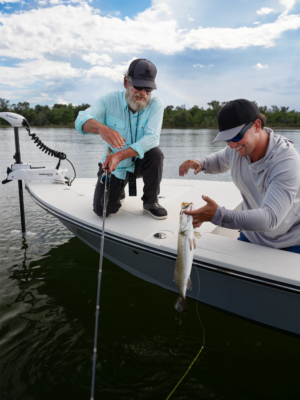
Anglers should avoid randomly fishing long stretches of featureless channel. Instead, concentrate on places where structure, moving water and baitfish come together.Watch for Bait and Moving Water
Mullet and other baitfish are important indicators when searching for fall trout. Watch for nervous bait on the surface, birds feeding nearby or concentrations of bait showing up on sonar.
Moving tides can improve fishing around channel edges, especially where current sweeps bait past points, rocks or the mouths of cuts. An outgoing tide can be particularly interesting around drains that empty into the main channel.
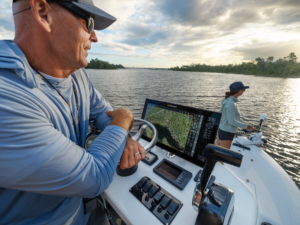
Modern electronics can help locate these features. Minn Kota recently announced a new integrated fishing system powered by Humminbird Imaging, bringing the two longtime fishing technology brands together under the Minn Kota name. Its new X Series fish finders feature side-imaging and down-imaging sonar that can help anglers examine channel edges and submerged structure. The system also integrates compatible trolling motors, including enhanced Spot-Lock positioning technology, which can help anglers hold near productive ledges and current breaks while concentrating on fishing.
Work Different Depths
Soft-plastic paddletails and curly-tailed grubs are excellent choices for probing channel edges. Start with a 1/4-ounce jighead, increasing weight when necessary to maintain contact with the strike zone in stronger current.
Cast toward the shallower side of a ledge and retrieve the lure back toward deeper water, allowing it to fall naturally along the drop. Sometimes trout will strike near the top of the ledge, while at other times they may hold farther down the slope.
Live shrimp and finger mullet can also produce, particularly when presented near current breaks.
Fish Safely and Keep Moving
Texas ship channels carry substantial commercial traffic, making boat positioning and awareness especially important. Stay clear of vessel traffic and restricted areas, and never allow fishing equipment or anchoring systems to interfere with navigation.
If trout aren’t present around a promising ledge, move to another section with similar structure rather than spending too much time in one location.
Fall trout fishing along the ship channel is often a matter of finding the right combination of bait, current and depth. Once those elements come together, anglers can discover productive fishing that many shoreline-oriented fishermen overlook.
TF&G Staff