
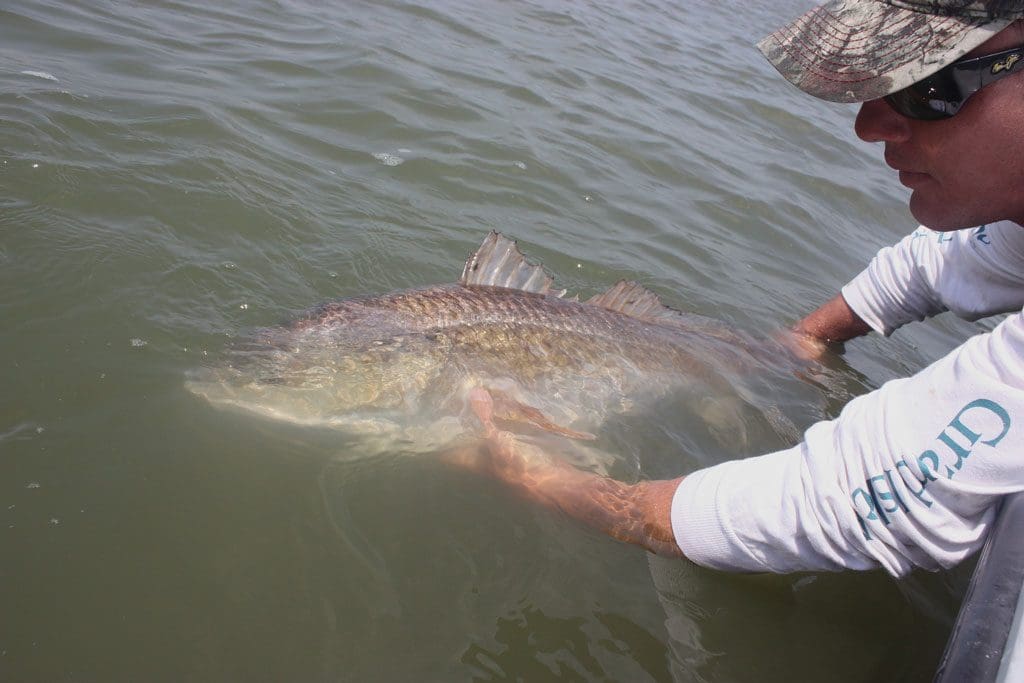
There are few experiences in Texas saltwater fishing more exciting than getting into a massive school of bull redfish. When these big, powerful fish are stacked up around the jetties or moving through coastal passes, the action can be absolutely incredible. It’s not unusual for anglers to hook one fish after another, sometimes with multiple rods bent at the same time.
And when the action is that good, it’s tempting to keep catching them until your arms give out.
But there’s something to be said for catching a few of these incredible fish, getting some great photos and moving on to another fishing opportunity.
Bull redfish are mature fish that make an important contribution to the spawning population. Many of the giants caught around Texas jetties are well over a decade old, and some are considerably older. They’ve survived predators, storms, fishing pressure and countless other challenges to reach that size.
While redfish are tough customers, catch-and-release fishing isn’t completely without consequences. Even fish that swim away strongly can experience stress, physical injuries and, in some circumstances, delayed mortality. Water temperature, fight duration, handling practices and hooking location can all influence their chances of survival.
That’s why I believe anglers should think about the cumulative impact of catching fish from the same school over and over again.
If you’re fortunate enough to encounter a massive concentration of bull reds, there’s certainly nothing wrong with enjoying the action. Catch a few, take some pictures and appreciate the opportunity. But instead of catching 10, 15 or 20 fish apiece simply because they’re biting, consider moving on and trying something different.
It’s a simple way to enjoy an incredible fishery while reducing unnecessary stress on these mature fish.
Another important consideration is tackle selection. When fishing natural bait for bull redfish, non-offset circle hooks are an excellent choice because they’re designed to catch fish in the corner of the mouth or jaw rather than deep in the throat. They aren’t foolproof, but properly used circle hooks can substantially reduce deep-hooking injuries.
Using tackle heavy enough to land fish efficiently, keeping them in the water whenever possible and having cameras ready before lifting them for a quick photograph can also make a difference.
And remember that a big redfish doesn’t have to be photographed from every angle to make the experience memorable.
I’ve always believed conservation is about more than regulations and bag limits. It’s also about the decisions we make when nobody is telling us what to do.
There is no magic number of bull redfish that makes a fishing trip responsible or irresponsible. Conditions vary, and so does the stress placed on individual fish. But when you’re fortunate enough to find one of those massive schools, exercising a little restraint is worth considering.
Enjoy the action, celebrate the catch and then leave a few of those giants undisturbed.
After all, one of the greatest things about fishing the Texas coast is knowing those big reds are still out there, and that we might get another chance to encounter them someday.
Chester Moore