
EVERY TEXAS HUNTER AND ANGLER knows the pre-dawn drill: coffee in the thermos, ice in the cooler, and a final glance at the phone before the pickup rolls out of the driveway. Almost every time, the map app flashes two options—the main highway or a “shortcut” that shaves seven or eight minutes off the ETA.
When you are running light at midday, that shortcut makes sense. When you are pulling a 20-foot bay boat, a tandem-axle bass rig, or a truck bed loaded down with corn, stands, and coolers in the dark, the shortest route is rarely the best drive. Spending ten minutes the night before to plan around roadwork, tight approaches, and heavy commercial traffic is the easiest way to reach the lease gate or the launch ramp without fighting the steering wheel.
Check DriveTexas Before You Set the Alarm
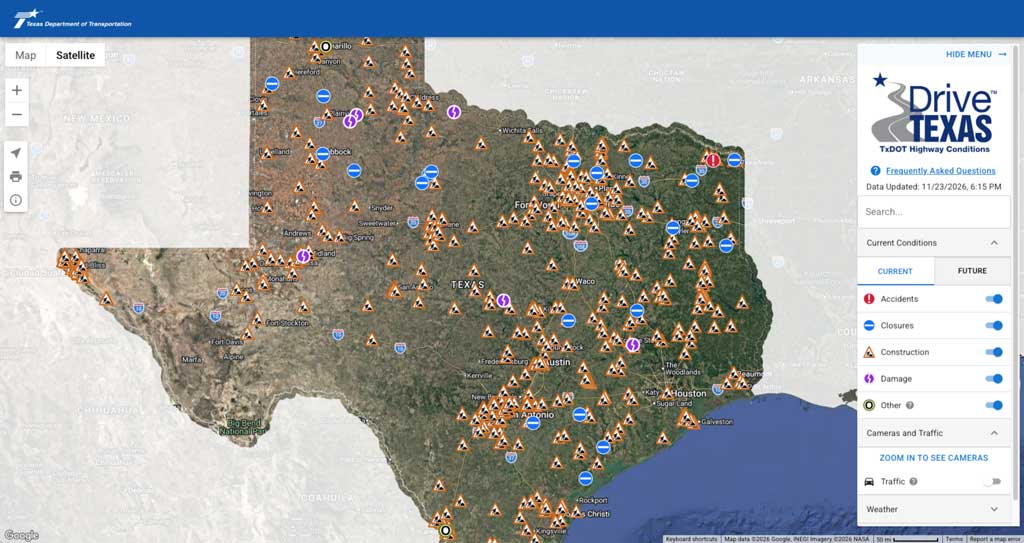
Standard navigation apps are built for passenger cars chasing the fastest time, not for pickups and trailers that need room to maneuver. Before you turn in for the night, pull up DriveTexas, the Texas Department of Transportation’s official road conditions map and mobile app.
DriveTexas is updated by TxDOT crews with construction zones, lane closures, and scheduled roadwork across Interstates, U.S. Highways, State Highways, and Farm-to-Market and Ranch-to-Market roads. If your usual highway funnels two lanes down to one between concrete barriers, or if an exit closure forces a tight detour through town, you want to catch it at 8:00 p.m.—not at 4:30 a.m. with a boat swaying behind your bumper. Adding five extra miles on a wide, open highway beats threading a narrow work zone next to 18-wheelers in the dark.
Compare the Final Approach to the Gate or Ramp
Once your main highway is locked in, zoom in on the last five miles. That is where most pre-dawn headaches start. Switch your map to satellite view and compare the approaches to your lease gate or boat ramp before you ever leave the house.
Think through how you will actually make that final turn. A narrow, two-lane Farm-to-Market road with a steep drop-off and no shoulder leaves zero margin when you have to slow to a crawl to swing a trailer into a dark caliche entrance. If an alternate approach lets you make a right-hand turn off a road with a paved shoulder or a dedicated turn lane—instead of a left turn across oncoming highway traffic—take the extra few minutes to come in from that side. Clean sightlines matter even more before first light, when headlights flatten depth perception and make it harder to judge how fast an approaching rig is closing.
Pick a Fuel Stop Built for a Rig
Running low on fuel at 5:00 a.m. forces bad decisions, like wedging a crew-cab pickup and a 22-foot boat into a cramped corner station with tight pumps and a blind exit. Pick your fuel and ice stop the night before, and choose one built for long wheelbases.
Look for highway travel centers or larger roadside stops with pull-through lanes, wide turning aprons, and clear sightlines getting back onto the highway. The goal is simple: fuel up, grab ice and coffee, and pull straight out without ever putting the truck in reverse. If you are towing a boat, watch the overhead canopy clearance, check that your trailer lights are still burning during your walk-around, and avoid blocking commercial diesel lanes while you run inside.
Give Heavy Trucks Room Before Your Turn
Out on the highway, one of the smartest habits you can build is giving commercial trucks plenty of room—especially as you set up for your exit, boat ramp, or lease gate. According to the Federal Motor Carrier Safety Administration’s Our Roads, Our Safetyguidance, heavy trucks require significantly more distance to stop and wider space to swing through turns than passenger vehicles. Merging in front of a semi right before you hit the brakes for a rural turnoff leaves very little margin for error.
Keep a few practical habits in mind when sharing the road:
- Avoid lingering alongside a trailer. Riding next to an 18-wheeler blocks your own view of the road ahead and cuts off your escape room if traffic slows or shifts. Pass cleanly when you have open pavement, or hang back until the lane clears.
- Signal early and clear the lane cleanly. Give drivers behind you plenty of warning before you start shedding speed for a lease gate or ramp entrance, and wait until you can see the entire truck in your rearview mirror before pulling back into its lane.
- Give wide turns extra space. If a semi ahead of you is signaling a turn onto a county road or into a fuel stop, hold back and never try to squeeze between the trailer and the shoulder.
A good morning in the stand or on the water starts the evening before you turn the key. Pick the wider road, know your fuel stop, and build in extra room around heavy rigs—you will pull up to the gate relaxed and ready for daylight.
This outdoor travel planning guide was prepared with support from Texas Truck Accident Lawyer.