
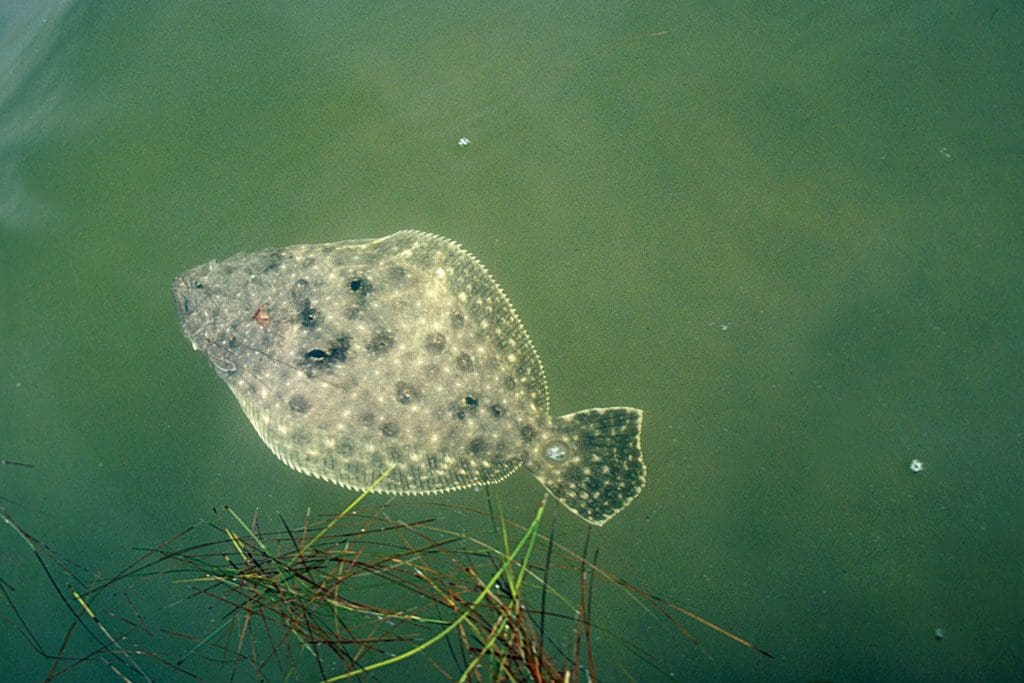
Could cloning help save the declining southern flounder?
Researchers at Texas A&M University think it could be one way to help.
According to A&M Mofficials, Texas Parks and Wildlife, Texas A&M University’s Department of Wildlife and Fisheries’ Dr. Todd Sink and graduate research assistant Elizabeth Silvy have developed a methodology that may aid stock enhancement programs that promote the flounder fishery.
The inherent cause of stock decline can be attributed to the fact that male flounder outnumber female flounder in the wild, and that larval flounder are temperature dependent when it comes time to form gonads. If temperatures are too high or too low, a majority of the offspring produced will be male. This has been proven true in the wild as well as in stock enhancement programs currently run by TPWD. To produce a hearty wild flounder stock, or even promote hatchery numbers, a majority of the offspring must be female, as one male can mate with a hundred females.
A&M officials said after cloning of female flounder, broodstock females that are genetically female and physically m ale are created.
 These female/male flounder can then be bred back to wild females collected from TPWD’s stock enhancement programs to produce all female progeny to be release in the wild.
After milt (flounder sperm) and eggs are collected from adult fish, the milt is subjected to a UV irradiation treatment that renders the DNA within useless for passing on to the offspring. The UV irradiated milt is then mixed with eggs collected from the female flounder. These fertilized eggs are subjected to different shock treatments using either a hydrostatic pressure chamber or a cold water bath. This causes the egg to retain the second polar body and hatch as a gynogenetic clone of the female flounder.
Once the larvae are developed, they are subjected to a methyltestosterone treatment that will aid in the development of male reproductive organs in a genetically female fish. These fish will never be released into the wild; instead they will be kept as broodstock to breed with female flounder collected from the wild to maintain genetic diversity.
I dunno about this. Wouldn’t the offspring of these fish that get released into the wild have a damaged set of DNA from the Father(genetic mother) fish? The offspring would take DNA from both parents. That DNA is going to get into the wild no matter what they say.