
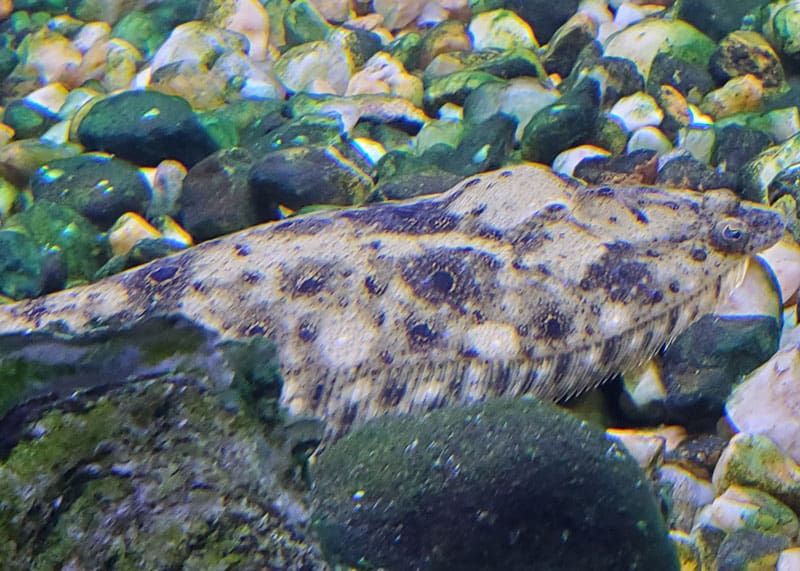
In the past we’ve taken a look at observations of black drum and speckled sea trout kept in a (very large) aquarium. Well, after releasing the speckled trout we moved on to flounder. Luke the Fluke has now been residing in the aquarium for a couple of months—and the revelations have been rather amazing.
Observation Number One: This fish is the smartest one we’ve observed yet. When he sees something merely two times, he somehow manages to put two and two together and alter his behavior. After pouring live shrimp into the tank from a bucket twice he began positioning himself under the bucket as soon as it appears, so he can easily pick off the momentarily disoriented shrimp. After twice watching minnow cluster near the surface for feeding, he began positioning himself below their feeding area when the food comes out, so he can sneak up from underneath while they’re distracted. This. Fish. Is. SMART!
Observation Number Two: He shows absolutely, positively no interest in eating anything that isn’t moving. Keep those jigs bouncing and those baits drifting (unless live and kicking) because when something just sits there the chances of it getting eaten are zero.
Observation Number Three: When the flounder strikes minnow he tried to get them head-first or tail-first but sometimes grabs them sideways. When this happens the flounder will vibrate its body to violently smash the baitfish into the bottom. After three to five seconds, it swims up a few inches, turns the minnow, and sucks in to swallow it. If the minnow manages to escape during this phase, which happens maybe a third of the time, the flounder allows itself to sink while looking up. If it sees the minnow it goes right back after it but if not, it sits there swiveling its eyes around for at least a minute or two before moving again. When you miss a hit while flounder fishing, repeat the presentation in the same spot several times over; if the fish hasn’t felt the sting of a hook yet you can bet it will be in about the same spot, gazing up to look for his escaped meal.