
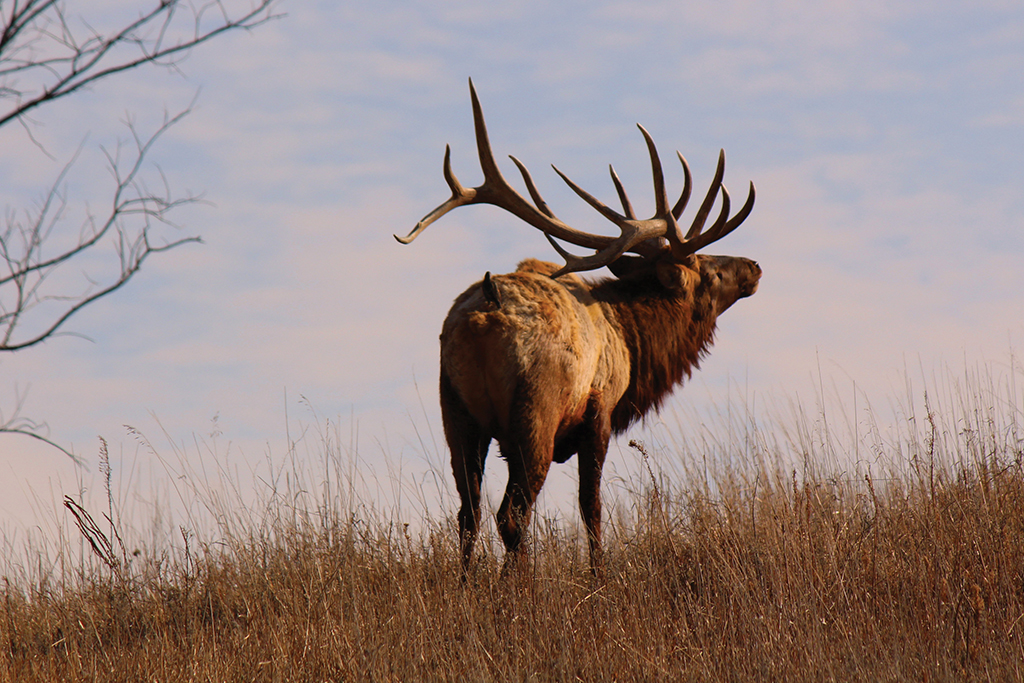
While driving through Edwards County during a recent hunting trip in the southwestern Edwards Plateau, I was surprised to see a free-ranging bull elk standing outside a high fence. This unexpected (got a crappy long distance cell phone pic) sighting underscores the growing presence of elk in Texas, particularly in areas like the Hill Country, where elk populations appear to be increasing due to escapes from high-fence ranches and natural migration.
Historically, elk were native to Texas, with archaeological evidence and historical accounts confirming their presence across the state before being extirpated in the 19th century. Recent studies indicate that free-ranging elk in regions like the Davis and Glass Mountains are the result of natural immigration from neighboring states, suggesting a recolonization of their former range.
Despite their native status, elk are currently classified as exotic, non-game animals in Texas, which affects their management and conservation. However, sightings like the one in Edwards County highlight the potential for populations to reestablish themselves in parts of Texas, especially with the support of conservation-minded landowners and hunters.
The presence of free-ranging herds in Texas raises important questions about wildlife management and conservation strategies. As elk continue to appear outside of high-fence areas, there is an opportunity to reconsider their status and develop plans to support their populations in suitable habitats across the state.
If you have any photos of free-ranging elk inTexas please send to cmoore@fishgame.com.
NOTE: We actually have a story about a legit free-ranging MOOSE in Texas! Read that here.