
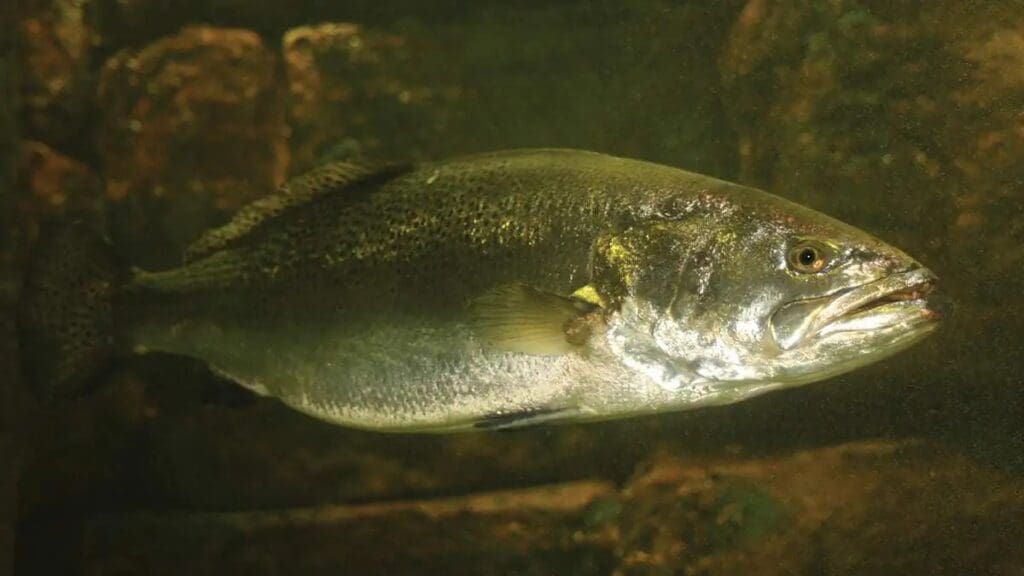
Every coastal angler has experienced it.
One week, speckled trout are stacked up along a shoreline, hammering shrimp and mullet with reckless abandon. A few days later, they’re gone.
Did they move into deeper water? Did they head toward the Gulf? Or did they simply relocate to another part of the bay?
For generations, Texas anglers have followed the seasonal movements of speckled trout, from winter fishing in deep channels and bayous to spring action along shorelines and summer fishing around passes, jetties and beachfronts.
But just how far do these fish travel?
Research conducted in Texas and neighboring Louisiana offers some fascinating answers, including evidence that some trout leave their home estuaries for coastal Gulf waters while others remain remarkably loyal to the bays where they were tagged.
One of the most interesting Texas investigations was published in 1993 by William B. Baker Jr. and Gary C. Matlock.
The researchers tagged 488 spotted seatrout in Trinity Bay, part of the Galveston Bay system, and documented 54 recaptures.
Their findings revealed a seasonal pattern. Trout moved toward the Gulf of Mexico during late spring and summer, possibly in connection with spawning or feeding, before returning toward their original tagging locations in fall.
Interestingly, the tagged fish did not commonly turn up in East or West Galveston bays. Instead, the research suggested movements between Trinity Bay and waters closer to the Gulf.
The study did not establish an exact percentage of tagged fish that entered the open Gulf, but it documented the seasonal movement toward it.
That’s particularly interesting considering the number of anglers who target trout along the Galveston beachfront, Bolivar Peninsula and the area’s passes during warmer months.
The research offers scientific support for a seasonal pattern that generations of Texas fishermen have observed on the water.
Read the 1993 Trinity Bay study
Tracking Trout in Sabine Lake
More than three decades later, researchers were using sophisticated electronic tracking equipment to investigate trout movements in Sabine Lake, along the Texas-Louisiana border.
A research analysis released June 4, 2025, by Carly Standbridge examined spotted seatrout movements using acoustic transmitters and a network of 32 receivers deployed beginning in December 2020.
Twenty-seven trout were fitted with transmitters, and 18 were subsequently detected by the receiver network.
The equipment recorded an impressive 74,066 detections, providing a detailed look at how tagged fish used portions of the estuary.
And here’s where things get interesting.
Not a single tagged trout was documented entering the open Gulf of Mexico or a neighboring estuary.
That doesn’t mean none of the fish ever entered Gulf waters. Acoustic receivers only document movements when functioning transmitters are detected within their range. But the findings offered an intriguing look at how trout use their home estuary.
One area that stood out was Keith Lake, a marsh-connected body of water along the Texas side of the Sabine system.
Researchers documented considerable activity around Keith Lake, along with detections around Texaco Island and channel areas.
For anglers familiar with Sabine Lake, that’s fascinating. The system offers everything from shallow marsh shorelines and oyster reefs to deep channels and direct access to Gulf waters through Sabine Pass.
Yet the tagged fish that researchers monitored showed considerable use of habitat within the estuary rather than documented departures into the Gulf.
The study also demonstrated that individual trout varied in how frequently they were detected. Some showed repeated use of monitored areas over extended periods, while others appeared much less frequently.
The findings suggest that some Sabine Lake trout may spend considerable time moving among familiar habitats without undertaking extensive coastal migrations.
Read the 2025 Sabine Lake analysis
Louisiana Trout Make a Run for It
Just across the state line, researchers conducted another fascinating investigation in Calcasieu Lake, Louisiana, better known to coastal fishermen as Big Lake.
The findings were particularly interesting because they revealed something many fishermen might never have suspected.
Male and female speckled trout don’t necessarily follow the same travel patterns.
Researchers fitted 172 adult spotted seatrout with acoustic transmitters and monitored the estuary from May 2007 through October 2009. The study, published May 16, 2013, in Marine and Coastal Fisheries, used an array that eventually included 60 receivers.
Of the tagged fish, 145 were detected and included in the principal movement analysis.
Researchers classified 28 trout as emigrants, meaning they departed the monitored estuary.
That’s approximately 19 percent of the 145 fish.
But the differences between males and females were especially revealing.
Of 45 males included in the sex-specific analysis, 13, or approximately 29 percent, emigrated. Among 80 females, only 11, or about 14 percent, did so.
Four additional emigrants were of undetermined sex.
After accounting for limitations in detecting fish movements, researchers estimated that emigration rates could have been as high as 42 percent for males and 16 percent for females.
And the timing was no coincidence.
Documented departures occurred during late spring and summer, from late April through mid-September, when water temperatures exceeded approximately 75 degrees.
The fish departed the monitored estuary through routes connecting Calcasieu Lake with surrounding coastal waters. The researchers could document departures but could not determine the ultimate destinations of fish after they left the receiver network.
Some eventually returned. Five emigrants were detected again, with four confirmed back in the estuary’s interior.
The study revealed that male trout were considerably more likely to leave the system, while approximately 85 percent of females demonstrated fidelity to the estuary.
For fishermen who pursue trout around Calcasieu Pass, the ship channel, oyster reefs and shorelines of Big Lake, the findings offer a fascinating glimpse into what happens beneath the surface.
Some fish leave. Others stay. And the males appear more inclined to wander.
Read the 2013 Calcasieu Lake study
Homebodies and Wanderers
These studies reveal something important about one of the Gulf Coast’s most popular game fish.
There isn’t necessarily one great speckled trout migration that every fish follows.
Some trout make seasonal movements toward the Gulf, as demonstrated by the historical Trinity Bay research. Others spend substantial periods within their home estuaries, as documented by the Sabine Lake tracking work.
And the Calcasieu Lake study revealed that males and females can behave quite differently when it comes to leaving their home waters.
Earlier tagging studies have also documented occasional trout traveling far greater distances, although most recaptures have historically occurred relatively close to where fish were originally tagged.
That means a trout caught along a shoreline in June might have spent winter in a nearby channel. Another fish caught in the same location might have traveled through a pass from another part of the estuary.
And somewhere out there, a few trout may be making much longer journeys.
For Texas fishermen, understanding these movements adds another dimension to the pursuit of speckled trout.
Water temperature, salinity, spawning activity and available forage all influence where fish concentrate during different seasons.
A productive shoreline can seemingly go dead overnight, while a nearby channel or reef suddenly comes alive.
The fish haven’t necessarily disappeared. They’ve simply moved somewhere else.
The next time you’re fishing Sabine Lake, Galveston Bay or one of the other great trout-producing estuaries along the Texas coast, consider what these studies have revealed.
Some of those fish may have spent much of their lives within a few miles of where you’re casting. Others may have traveled through passes and into coastal waters before returning. And that’s one of the great mysteries of speckled trout fishing. We know where we catch them. Scientists are beginning to show us more about where they go in between.
Chester Moore
great article and references