
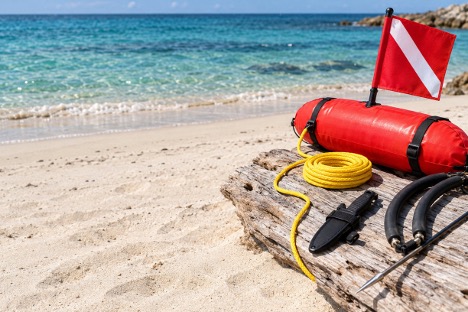
SPEARFISHING ATTRACTS adventure-seekers who relish the chance to test their skills underwater, but it comes with hazards different from other forms of fishing or recreational diving. The challenge of hunting on a single breath adds extra risk, and freediving adds extra physiological stress, while sharp equipment, underwater structures, and shifting conditions make awareness critical. Choosing and maintaining the right equipment, along with following key safety routines, can help keep this pursuit both rewarding and safe.
Careful selection and maintenance of your spearfishing gear are part of that preparation.
Understanding the unique risks in spearfishing
Diving with a loaded speargun, often while breath-holding deep below the surface, means spearfishing involves more inherent danger than many outdoor sports. Air supply is self-limited, which makes any problem, such as disorientation, equipment entanglement, or blackout, far more serious. Swells, currents, and poor visibility can complicate navigation or create separation from your partner. Juggling multiple tasks, tracking fish, operating gear, and monitoring dive time, demands constant vigilance.
Common accidents include entanglement in lines or kelp, shallow-water blackout after strenuous dives, and injuries from mishandling spearguns. For example, a diver could become tangled in a float line while fighting a fish, leading to panic or a dangerous ascent. Each diver needs to understand these risks before they ever load a shaft or slip beneath the surface.
Pre-dive planning to minimize emergencies
Effective planning reduces surprises underwater. Before entering the water, assess the site for visibility, surge, and current strength. Note any boat traffic, submerged obstacles, or sudden drop-offs. For example, a spearfisher who scouts for boat activity and marks exit points before diving is prepared to respond to unexpected vessel movement. Identify exit and entry points, and confirm you and your buddy are clear about depth limits and maximum dive times.
Agreeing on boundaries and signaling systems allows for smoother coordination once the dive begins. For example, plan to surface at set intervals and check with your partner each time—saying “I will come up every two minutes to signal all is well” is a useful pre-dive agreement. Make sure you both know where to find emergency equipment if needed. This level of preparation sets the foundation for safer hunts.
Buddy protocols and underwater cooperation
The value of a reliable dive buddy cannot be overstated in spearfishing. One common protocol for freediving is a one-up/one-down system: while one diver hunts below, the other stays at the surface, monitoring and ready to respond. Consistent spacing, usually close enough to maintain visual contact, is essential. An example buddy exchange before submerging could be, “Are you ready at the surface? I will dive now, you watch me and be ready to assist if I signal trouble.”
If you lose sight of your buddy, avoid diving again until visual contact is re-established. Communication plans, such as hand signals or shouts, prevent confusion. Practicing scenarios before entering the water can mean the difference between inconvenience and catastrophe. Including freediving techniques in these drills helps ensure both divers know what to expect and how to react to potential problems.
Proper float and line handling reduces the risk of entanglement and increases surface visibility for boats. Choosing between a float line and reel depends on the environment; for example, a float line provides a clear visual and tether when working from shore or among boaters, while a reel may be preferable in heavy kelp or deeper water. The choice and maintenance of your equipment play a crucial role in safety, since properly set up equipment allows for quicker response if you become snagged or need to surface rapidly.
Always keep lines clear of potential snags and watch that they do not wrap around your fins, neck, or wrists. Make using a quick-release device a habit, and practice releasing the line under stress. For instance, practicing line-release with gloves on simulates a real entanglement caused by kelp wrapping around a leg. Being able to abandon equipment quickly in an emergency can save your life.
Knife positioning and access
Every diver should carry a sharp, corrosion-resistant knife in a place accessible with either hand, often on the calf or upper arm. In practice, snags on kelp or abandoned fishing line are common. If trapped, cut away from your body, keep movements small, and avoid using excessive force to reduce the risk of injury or wasted air. A diver who calmly uses their knife to free a fin from monofilament is an example of why good positioning and practice matter.
Regularly check that your knife is secure and not prone to snagging or falling loose during entry and exit, especially across rocky terrain.
Handling weapons and maintaining awareness
Safe loading and unloading procedures for spearguns are non-negotiable. Always ensure the shaft is pointed away from people, and never load a spear until ready to hunt. Keep separation between you and your buddy; accidental discharge can cause severe injury.
Excitement and tunnel vision are common when a target fish appears. Remember to control your breathing and avoid rushing, as hasty actions are a frequent cause of gear mishandling and injury. Ensuring your speargun is stowed safely and cannot fire accidentally while at the surface or moving through surf zones is just as important as aiming accurately below.
Interactions with boats and the shore
Visibility to boaters is critical. Use a brightly colored float and a standard diver-down flag, keeping it close to your position. When surf or wakes roll through the site, time entries and exits cautiously to avoid being knocked into rocks or losing equipment. For instance, waiting for a lull before swimming ashore can prevent being thrown onto boulders. If returning to a boat, approach from the stern or the side where the operator expects you.
Post-dive and emergency practices
Inspect your lines, bands, speargun triggers, and buckles for damage as soon as you exit the water. Early detection of wear or corrosion helps prevent equipment failures on subsequent dives.
In emergencies, recognize the symptoms of a possible shallow-water blackout, such as sudden weakness or confusion, and respond immediately by turning the diver face-up and supporting the airway above water. In remote locations, having access to emergency oxygen and basic first-aid knowledge can improve the chances of a better outcome. In freediving incidents, rapid airway support and calm, rehearsed actions are particularly important. Carry a waterproof card with local emergency contact information and review rescue procedures with your team before every outing.