

Sometime in the mid-2000s, I was fishing for speckled trout along the Sabine jetties when I caught something completely unexpected.
It wasn’t a trout, redfish or one of the other species anglers regularly encounter around the massive granite rocks that line Sabine Pass. It was a small rock hind, a member of the grouper family more commonly associated with offshore reefs and other hard-bottom structure.
That little fish has stuck in my memory because it was such an unusual catch. Most Texas anglers don’t think of grouper when they head to the jetties, but these massive rock formations provide habitat for a surprising variety of fish, including species generally associated with offshore waters.
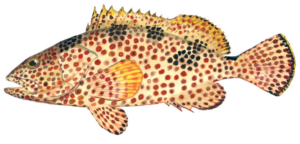
And if we go back far enough in Texas fishing history, grouper weren’t always such an unusual part of the jetty fishing experience.
In fact, one of the largest grouper ever caught on rod and reel came from a Texas jetty, and historical accounts suggest these enormous fish were once a significant part of the coastal fishing scene.
A 551-Pound Grouper at Galveston
On June 29, 1937, Houston angler Gus Pangarakis landed a 551-pound goliath grouper while fishing from Bettison’s Pier on the Galveston North Jetty.
The catch established a Texas record that still stands and was also recognized as a world record until a 680-pound specimen surpassed it in 1961.
The story of Pangarakis and his incredible catches was documented by longtime outdoor writer Shannon Tompkins in a June 2016 Houston Chronicle feature. Tompkins interviewed members of Pangarakis’ family and examined historical photographs and newspaper accounts documenting his fishing exploits.
Pangarakis was no ordinary jetty fisherman. He was a dedicated bodybuilder and accomplished boxer who specialized in catching enormous fish, including sharks, sawfish and grouper weighing hundreds of pounds.
His nephew, Rick Pangarakis, told the Chronicle that his uncle’s fishing companions sometimes tied him to the rocks so the huge fish he hooked wouldn’t pull him into the water.
Rick explained that the rules governing fishing records required the angler to fight the fish without assistance. Gus developed his own way of dealing with that challenge, using ropes to secure himself while battling fish that sometimes weighed several times as much as he did.
The 1937 grouper was caught from Bettison’s Pier, a structure near the end of the Galveston North Jetty that was accessible by boat. A contemporary newspaper account described the fish becoming entangled in the pilings during the fight.
The enormous grouper was eventually brought to Houston and photographed at Kelley’s Cafe, where Pangarakis worked. It became a local sensation at a time when giant catches often attracted newspaper coverage and crowds of curious onlookers.
According to the Chronicle account, Pangarakis continued catching huge sharks and other goliath grouper over the following years. In 1939, he landed a 736-pound largetooth sawfish from Galveston’s North Jetty, another Texas record that remains on the books.
His nephew told Tompkins that people continued asking about the remarkable catches decades later, particularly because Pangarakis accomplished them from piers and jetties rather than fishing boats.
When Giant Grouper Were Part of Texas Fishing
The Pangarakis catch was extraordinary, but historical fisheries records suggest that goliath grouper were much more familiar to Texas coastal anglers in earlier generations.
A 1993 Texas Parks and Wildlife Department publication, Saltwater Fishes of Texas: A Guide to Knowing and Catching Bay and Gulf Fishes, described goliath grouper as one of the largest fish found in Texas waters.

The publication stated that specimens weighing 200 to 300 pounds were “not uncommon” and noted that several fish weighing 400 to 500 pounds had been caught.
It also described their preferred habitat as jetties, pilings, wrecks and the mouths of rivers and sloughs. The publication noted that anglers targeting sharks sometimes encountered giant grouper, particularly when fishing large baits on the bottom at night.
Those descriptions offer an interesting glimpse into an era when catching an enormous grouper was a recognized possibility along the Texas coast.
Even earlier accounts are remarkable.
A federal fisheries assessment of goliath grouper cites a July 28, 1895, New York Times report describing an unusually large run of the fish in Texas waters. According to the assessment, one fishing party caught 14 grouper with a combined weight of approximately 5,000 pounds. The largest reportedly weighed around 954 pounds.
That account predates modern recordkeeping and should be viewed as a historical report rather than a verified modern fishing record. Nevertheless, it demonstrates that enormous grouper were being reported from Texas waters long before Pangarakis made his famous catch.
Another historical reference included in the federal assessment describes a 597-pound grouper recorded from Aransas Bay in 1890.
These accounts paint a picture of a Texas coast where massive grouper were known from bays, passes and other relatively nearshore environments.
More Than Just Goliath Grouper
Although the giant goliath grouper dominates the historical record, several smaller grouper species are associated with Texas jetties and other nearshore structure.
One is the rock hind, the species I caught at Sabine Pass. These fish have reddish-brown coloration with spots and markings that help them blend into rocky surroundings. They are much smaller than goliath grouper but share the family’s preference for structure where they can find shelter and ambush prey.
Texas Parks and Wildlife identifies rock hind as one of the more common grouper species along the Texas Gulf Coast and includes jetties among their habitats.
Another interesting species is the Warsaw grouper. Adults are generally associated with deep offshore waters, but TPWD notes that young Warsaw grouper may inhabit bays, jetties, artificial reefs and offshore platforms before moving into deeper habitats.
That is an interesting connection between the fish living around our coastal passes and the much larger species anglers encounter offshore.
Gag grouper are another possibility around nearshore structure. Although best known to anglers fishing offshore reefs and wrecks, younger fish can use shallower coastal habitats during portions of their lives.
Recreational fishing information published for South Padre Island identifies gag grouper, rock hind and goliath grouper among the species associated with the Brazos Santiago Pass jetties.
Farther north, fishing information published by Fisherman’s Wharf in Port Aransas mentions an unusual strawberry grouper catch along the Port Aransas jetties. The account lacks enough detail to independently establish the identification, but it is another intriguing report of a grouper encountered in an area better known for trout, redfish and other coastal species.
These reports don’t establish that grouper are abundant at Texas jetties today, but they provide additional evidence that these environments can attract a wider variety of fish than many anglers might expect.
Chester Moore