

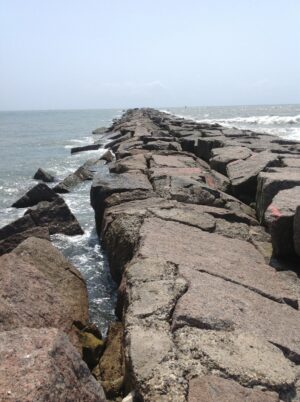
There is something special about fishing the Texas coast when winter begins to settle in. The crowds thin out, the north winds start blowing and the water takes on a different character. For anglers who know where to look, some of the most exciting fishing of the year can be found around the massive granite jetties that line the Texas coastline.
Two species stand out during this period: bull redfish and sheepshead.
Both are powerful fighters, both are closely associated with jetty systems and both offer anglers an opportunity to catch impressive fish during a time when many people have already put their saltwater tackle away for the season.
From Sabine Pass to Galveston, Port Aransas and South Padre Island, jetties provide access to deep water, tidal currents and an incredible variety of marine life. They are essentially artificial reefs that stretch from the bays into the Gulf, creating feeding opportunities for everything from tiny baitfish to giant redfish.
The trick to consistently catching fish during early winter is understanding how these two species use the same structure in very different ways.
Bull Reds After the Fall Run
Most Texas coastal anglers associate bull redfish with the famous fall run, when mature fish gather around passes and beaches in September and October. While that period certainly produces some spectacular fishing, the arrival of December doesn’t mean the big reds have disappeared.
Large redfish can remain around the jetties well into winter, especially when water temperatures are relatively mild and baitfish are still moving through the passes. Some of the best opportunities come during stable weather between cold fronts, when tidal movement concentrates food along the rocks and nearby channels.
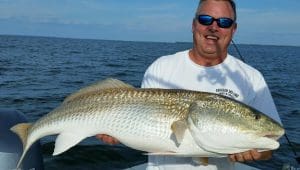
One of the most important things to understand about big redfish is that they don’t necessarily have to be right against the granite. These fish often patrol the edges of deep channels, current breaks and areas where the bottom drops away from the jetty structure.
At Sabine Pass, for example, the combination of deep shipping-channel water, strong tidal currents and extensive rock structure creates the kind of environment where large reds can find food throughout much of the year.
Anglers should pay particular attention to the ends of jetties, deeper washouts and areas where current changes direction around irregular sections of rock. These places create natural feeding lanes, allowing redfish to intercept bait without constantly fighting the strongest flow.
Natural Baits for Big Reds
There are plenty of artificial lures capable of catching bull redfish, but when the objective is connecting with a truly large fish during early winter, natural bait is hard to beat.
Fresh cut mullet is a longtime favorite along the Texas coast, and for good reason. A substantial chunk of fresh mullet puts out plenty of scent and provides a meal that a big redfish can locate even when visibility is limited. Cracked blue crab is another excellent choice, particularly when fishing around deeper rocks and channel edges.
A Carolina-style rig with a sliding sinker, heavy leader and appropriately sized circle hook is one of the simplest and most effective setups. Current determines how much weight is needed, but the objective is to keep the bait in the feeding zone without allowing it to tumble uncontrollably across the bottom.
Braided line in the 30- to 50-pound class, paired with an abrasion-resistant leader, gives anglers a fighting chance when a powerful redfish makes a run toward the rocks.
One mistake anglers sometimes make is assuming that the longest cast will produce the biggest fish. In reality, some of the most productive water may be surprisingly close to the jetty, particularly where submerged rocks meet deeper sand or mud bottom.
Sheepshead: Striped Bruisers of the Rocks
While redfish often work the deeper edges of jetty systems, sheepshead tend to be much more closely associated with the rocks themselves.
These striped members of the porgy family are perfectly equipped to take advantage of the incredible amount of food attached to submerged granite. Their powerful teeth allow them to crush barnacles, small crabs, mollusks and other hard-shelled organisms that many fish cannot easily consume.

Early winter can be an excellent time to begin targeting larger sheepshead, with fishing often improving as the season progresses toward their late-winter and spring spawning period.
The key is recognizing that sheepshead are structure-oriented fish. A difference of only a few feet in bait placement can determine whether an angler catches fish or spends the afternoon watching an unmoving line.
Look for submerged rock ledges, pockets protected from the strongest current and areas with heavy barnacle growth. The deeper portions of the rocks can be especially productive when temperatures fall, although fish may move shallower during warmer periods.
Unlike bull redfish, which may readily pick up a large chunk of mullet, sheepshead generally respond better to smaller offerings presented with precision.
The Art of Catching Big Sheepshead
Live shrimp is one of the most dependable sheepshead baits available to Texas anglers. Fresh dead shrimp also works, along with small crabs, including fiddler crabs where available.
The biggest adjustment for anglers accustomed to redfish is downsizing their tackle and paying much closer attention to subtle bites.
A small, sharp hook, often in the No. 1 to 1/0 range, matched with a short leader and enough weight to keep the bait near the rocks, is an effective combination. Small jigheads tipped with shrimp can also be deadly when lowered vertically along submerged granite.
Sheepshead have a reputation for stealing bait, and that reputation is well deserved. They can pick apart a shrimp without delivering the kind of strike anglers expect from a redfish or speckled trout.
Sometimes the only indication of a bite is a slight tap or an unusual feeling of weight on the line. Maintaining contact with the bait and reacting quickly can make an enormous difference in the number of fish hooked.
Once a large sheepshead is on the line, the challenge changes immediately. These fish are incredibly strong for their size and have a habit of diving straight toward the rocks. Keeping steady pressure on the fish and steering it away from sharp granite is essential.
Learn how Suzuki is helping to keep our oceans clean.
Cold Fronts, Currents and Feeding Windows
One of the most important factors in early winter jetty fishing is understanding how cold fronts influence fish movement.
A strong norther can push water out of the bays, lower water levels and dramatically change conditions around coastal passes. During these periods, deeper areas often become more attractive to fish seeking relatively stable temperatures.
Incoming tides can be especially productive after cold fronts when Gulf water is warmer than water draining from the bays. However, outgoing tides can also create excellent feeding opportunities by carrying shrimp, crabs and baitfish through the passes.
Rather than becoming committed to one particular tide, anglers should look for moving water and places where current creates natural feeding opportunities.
Safety is another major consideration. Winter winds and heavy Gulf swells can make exposed jetty rocks extremely dangerous. Fishing from a boat also requires caution, particularly near the ends of the jetties where waves and currents can interact unpredictably.
A Winter Fishing Tradition Worth Rediscovering
One of the great things about targeting redfish and sheepshead during early winter is that anglers can pursue both species on the same trip with only a few adjustments.
A morning might begin with cut mullet or cracked crab soaking along a deep channel edge in hopes of connecting with a bull redfish. Later, moving closer to the granite and switching to shrimp can turn the outing into a productive sheepshead trip.
There is also something appealing about the contrast between these fish. A bull redfish can produce a long, powerful run that tests an angler’s tackle and endurance, while a big sheepshead offers a close-quarters battle where a few feet of line can make the difference between success and a broken leader.
Texas jetties have produced incredible fishing memories for generations, and early winter is one of those periods when their potential is sometimes overlooked.
The next time a stretch of relatively calm weather follows a strong cold front, consider heading toward the granite with some fresh mullet, shrimp and a couple of stout rods.
There might be a giant redfish cruising the channel edge or a heavyweight sheepshead feeding just a few feet beneath the surface. Either one is a good reason to spend a winter day on the Texas coast.
Chester Moore